

Heijmans demonstrates that zero-emission infrastructure work is already a reality
Zero-emission construction is no longer an experiment. It is the direction in which the sector is moving. But in infrastructure, the challenge is more complex than anywhere else. Heavy machinery, high production pressure and locations without grid connections make electrification anything but straightforward.
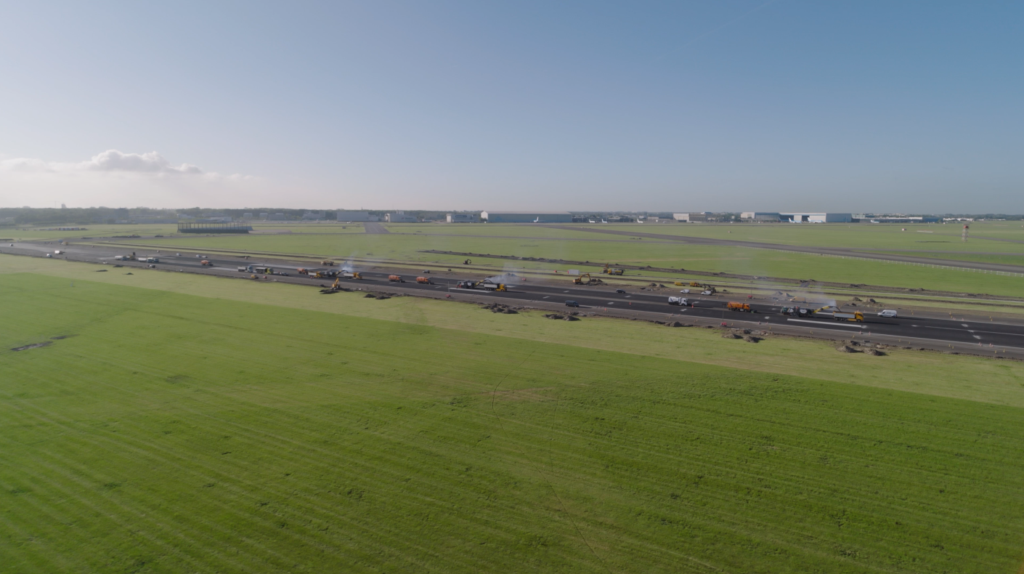
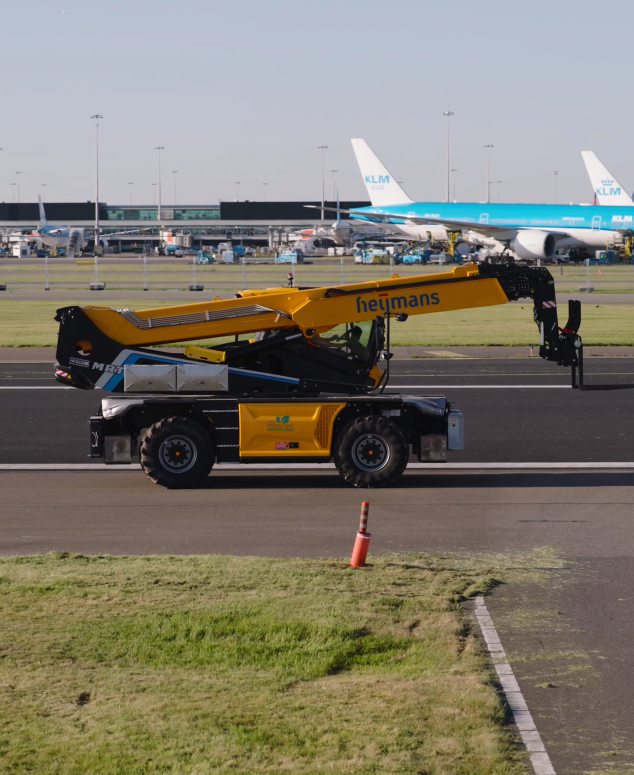
At Schiphol, Heijmans demonstrates that zero-emission operations are already possible today.
Not only because it’s required, but because it’s possible
Pressure from legislation and tenders continues to increase. Working without emissions is increasingly requested, and in some cases mandatory. But for Heijmans, that is not where the story ends.
Heijmans has clear ambitions. By 2030, the company aims to operate its own equipment emission-free. Electrification is therefore not merely a response to external requirements, but a deliberate choice to lead and to take responsibility for the future of the sector.
That ambition also means being willing to take extra steps, especially where the market is not yet fully set up for electric operation.
Electrification without factory-built solutions
When Heijmans started electrifying its equipment, factory-built electric infrastructure machinery was hardly available. Especially for heavy asphalt equipment, the market offered no viable solutions.
Rather than waiting, Heijmans chose a pragmatic approach. New machines were purchased with diesel engines and immediately converted to electric. This allowed Heijmans to scale electrification in a controlled way, from individual machines to complete work processes.
Safety is never up for discussion
When electrifying heavy equipment, safety is not something to negotiate. Construction sites involve large machines, often operating under complex conditions. That requires solutions that are demonstrably safe in all circumstances.
For both Heijmans and Intercel, safety is therefore the starting point of every technical decision.
“Safety comes first. It simply has to be a safe solution.”
Peter Schellekens
Senior Buyer (Construction Equipment) Heijmans
This conviction underpins every step in the electrification process and determines whether a solution is viable at all.
The reality behind electric operation
Electrification is not a matter of simply adding a battery. In practice, much more is involved.
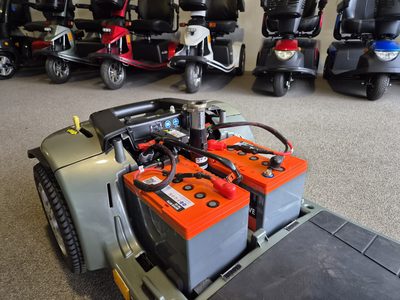
The available space in a machine is limited to the area previously occupied by the diesel engine, while the starting point is that the machine must be able to operate for a full working day on batteries. Weight and balance are therefore critical factors. Battery placement directly affects the stability and usability of the equipment.
In addition, energy consumption varies significantly depending on the application. For asphalt equipment, factors such as asphalt temperature, layer thickness and working width determine the required energy. This calls for customised solutions that adapt to real-world conditions.
Electrification at scale
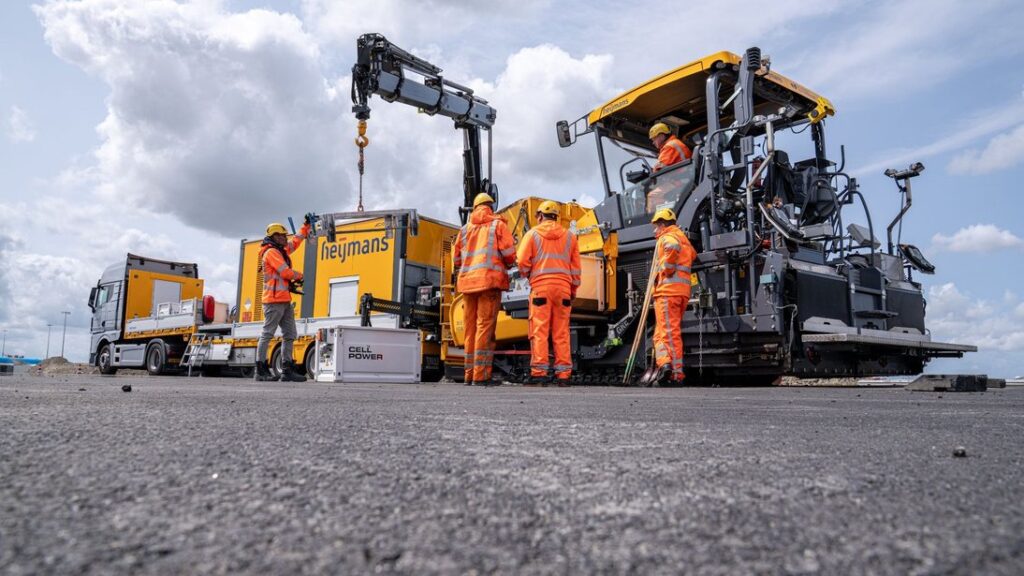
What started with the electrification of individual machines scaled up to the deployment of a fully electric asphalt train during the Schiphol project.
“Here is a so-called ‘asphalt train’, meaning all machines required for asphalting are operating fully electric and emission-free.”
Asphalt spreading machines, rollers and tack coat vehicles worked together as one integrated electric system. This was not a pilot, but an operational reality at one of the most complex project locations in the Netherlands. The moment it became clear: zero-emission asphalt paving is no longer theory.
Energy that moves with the work
Because energy demand varies greatly per application, flexibility is essential. Fixed battery systems are not sufficient in every situation to guarantee uninterrupted production.
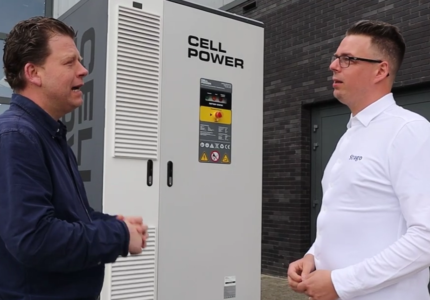
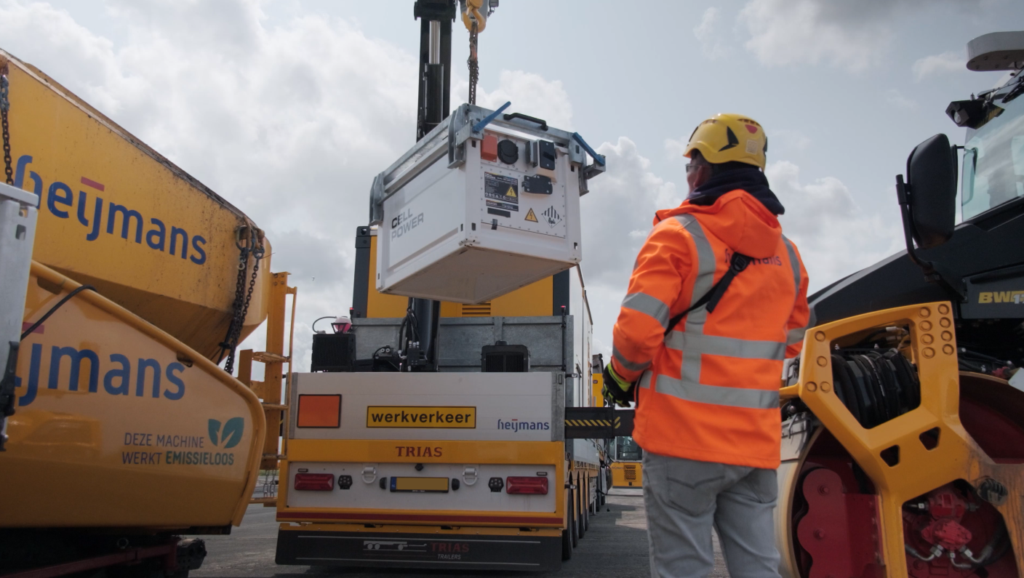
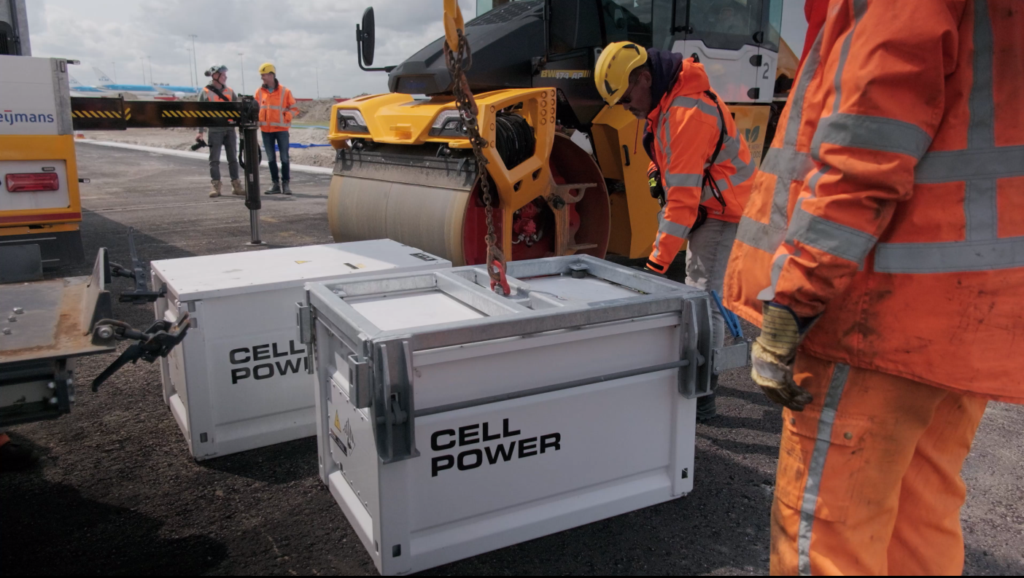
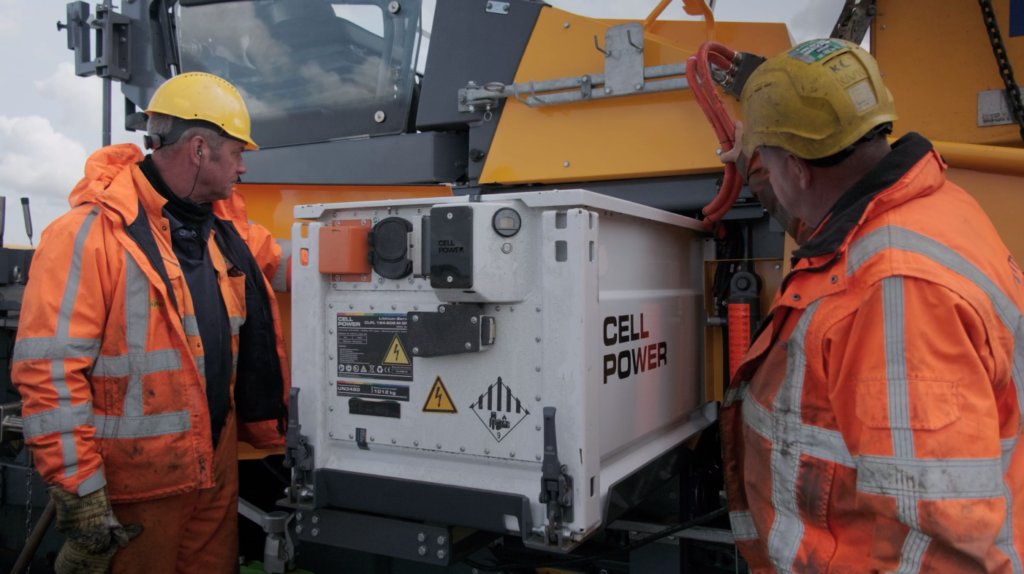
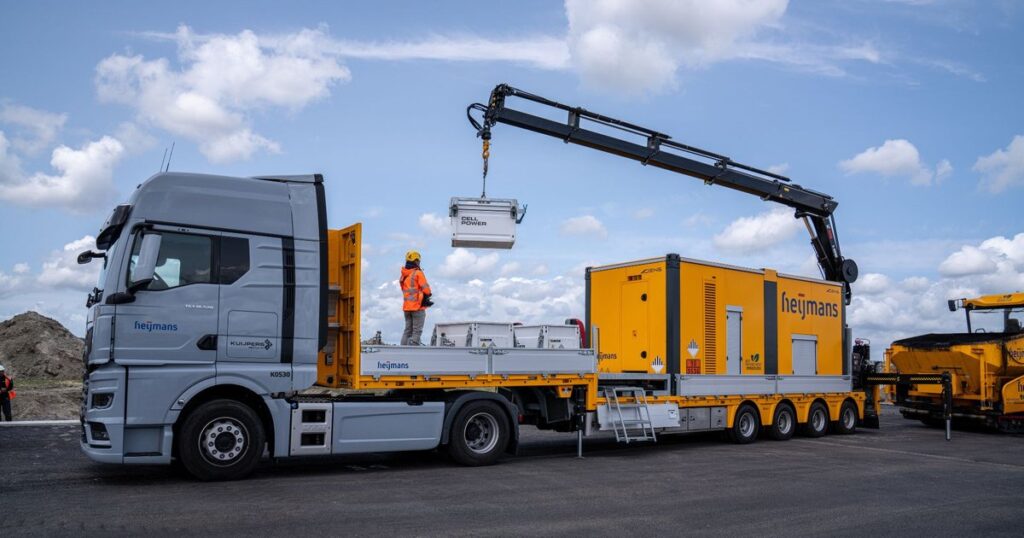
Under our product brand Cellpower, we develop customised swappable battery packs. These battery packs can be exchanged quickly on the machine and are interchangeable across different machines within a fleet. One pack can be in use while another is being charged, structurally preventing downtime and keeping the focus on production.
The battery packs are designed to fit within the available space and permissible weight of the machine and are applied in close cooperation with specialised conversion partners. This ensures that energy supply and machine design are optimally aligned, even during intensive and continuous operation.
From hesitation to confidence on the construction site
New technology requires adaptation. Operators want one thing above all else: to keep working. Anything that threatens continuity raises questions.
That was also the case with electric equipment. Initially, there was hesitation. Not out of reluctance, but out of professionalism. Practice had to prove that it worked.
“People on site just want to keep production going. They want a machine that works.”
Peter Schellekens
Senior Buyer (Construction Equipment) Heijmans
That real-world experience made the difference. As machines proved to be reliable and work continued without disruption, confidence grew. Additional benefits such as reduced noise, zero emissions and a more pleasant working environment were experienced across all projects. At locations with stricter noise and emission requirements, such as urban areas, that difference becomes even more apparent.
Scale demands smart charging solutions
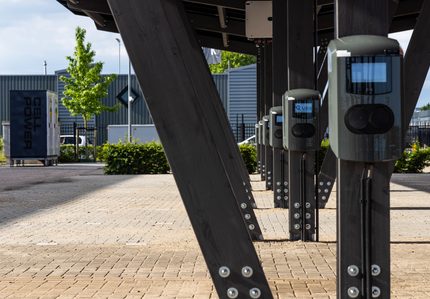
As the number of electric machines grows, so does the need for flexible charging. Projects move, and fixed grid connections are not always available.
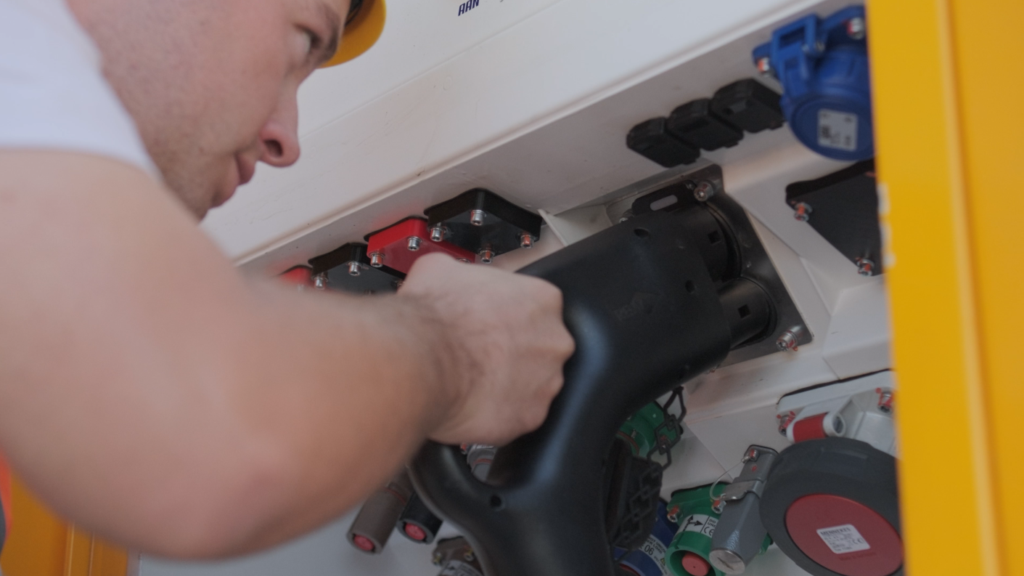
At Schiphol, Heijmans therefore chose to deploy a mobile charging hub, enabling multiple batteries to be charged simultaneously on site. Our contribution lay in the swappable battery packs that can be deployed across multiple machines, allowing the electric machine fleet to scale further.
The charging hub logically followed the steps that had already been taken within the electrification of the machine fleet.
Schiphol as the foundation for what comes next
Heijmans continues to look ahead. Based on the experience gained with electric equipment, machines that have not yet been electrified, such as road marking machines and vibrating plates, are also being considered as part of this ambition. For vibrating plates, Peter highlights specific challenges, including limited available space, permissible weight and the impact of continuous vibrations on the battery.
Schiphol is an important project for Heijmans. It demonstrates what is already operationally possible today and serves as a tangible starting point for the next steps toward a fully electric fleet.
From vision to practice
Zero-emission infrastructure work requires vision, but above all the courage to start. By electrifying step by step, aligning technology and operations, and keeping safety and reliability central, zero-emission work becomes achievable in practice.
The Schiphol project shows that zero-emission infrastructure work is no longer a future vision, but something being realised today. Each next step builds on that experience.