


Invest smartly with subsidies for battery storage
The government encourages businesses and citizens to become more sustainable. Therefore, subsidies are sometimes available for those who invest in sustainable alternatives. An energy storage system is a significant investment, but thanks to subsidies for battery storage, you can significantly reduce the cost.
There are a number of interesting subsidy schemes aimed at different battery storage applications. In this article, we’ll help you get started.
Missed the application period? It doesn’t mean you can no longer use the subsidy. Be on the lookout for the next round as most subsidies reopen yearly. Subsidy budgets and qualifications may slightly change every round.
What types of battery subsidies are available?
Battery subsidies and funding programmes are available at regional, national and European level. The main difference is not simply who provides the funding, but what the programme is designed to achieve.
National and regional programmes tend to focus more on accelerating the adoption of sustainable technologies. By making investments more attractive for businesses, governments can encourage earlier adoption of battery storage and other technologies that contribute to the energy transition.
European programmes generally operate at a broader level. They are more often focused on innovation, research, large-scale infrastructure and projects that contribute to strategic European energy and climate objectives.
This is not a strict distinction. Programmes and objectives overlap, but it provides a useful starting point: businesses looking for financial support to purchase and implement a battery storage system should generally start by exploring national and regional opportunities.
European battery subsidy programmes
European funding programmes support projects that contribute to broader European objectives. The focus is often on innovation, research, demonstration projects, energy infrastructure and the development of technologies and solutions that can contribute to the energy transition on a larger scale.
This means European funding is not always aimed at a business simply purchasing a battery storage system for its own site. However, some programmes also support deployment and infrastructure projects, so the eligibility criteria of each programme should always be considered individually.
National battery subsidy programmes
National programmes are generally more relevant to businesses planning to invest in and implement battery storage. Governments can use these programmes to make sustainable investments more attractive and encourage businesses to adopt technologies that help accelerate the national energy transition.
The objectives and eligibility criteria differ per country. Support may, for example, be linked to energy efficiency, renewable energy, electrification, grid flexibility or investments that reduce pressure on the electricity grid.
Regional battery subsidy programmes
Regional programmes operate closer to local businesses and can provide additional opportunities for battery storage projects. Provinces, regions and local development agencies may use financial incentives to accelerate sustainable investments while addressing challenges specific to their area.
These programmes can, for example, focus on local grid congestion, renewable energy, economic development or regional sustainability targets. Because regional programmes are closely linked to local priorities, their availability and conditions can vary significantly even within the same country.
European funding for business battery storage
Go directly to Dutch subsidies
It is not only the Dutch government that encourages sustainability. There are also a number of European funding opportunities for which Dutch companies can qualify. The two most important ones for when investing in energy storage are Horizon Europe and Connecting Europe Facility (CEF).

Horizon Europe
This is a program of the European Commission focused on research and innovation. With this program, scientists and entrepreneurs are encouraged to search for solutions to societal European issues. Companies that dare to invest in innovative and advanced technologies (such as our battery storage systems) can apply for subsidies from Horizon Europe.

Connecting Europe Facility (CEF)
With this subsidy scheme, the European Union stimulates initiatives that strengthen the European infrastructure in the field of digitization, energy and transport. This includes projects that remove existing infrastructure bottlenecks and projects that make existing systems more sustainable and efficient. Our battery storage systems are a good example of an innovation that is sustainable and reduces pressure on the existing grid. You can read more about this scheme on the RvO’s site.
Battery storage business subsidy (NL)
If you’re considering purchasing an energy storage system for your business, it’s worth finding out if you can get subsidies. There are a number of interesting subsidies for battery storage for business purposes and we list them for you below:

Energy Investment Allowance (EIA)
The energy investment deduction is a subsidy for companies that want to become more sustainable in the field of energy. If you choose to invest in sustainable energy or in business assets that reduce your CO2 emissions, you may be able to make use of the energy investment deduction (EIA). There are a number of conditions you must meet, which can be found on the site of the RvO. If your investment is on the energy list of the RvO and your application meets all the requirements, you can deduct 40% of the investment costs from your profit!

Incentives for Sustainable Energy Production and Climate Transition (SDE++)
With this subsidy scheme, the government encourages the growth of renewable energy. This scheme is aimed at companies in sectors such as agriculture, industry and mobility. The SDE++ is intended for initiatives that make us less dependent on fossil fuels, such as battery storage and green gas. On the site of the RvO you can find an overview of which investments you can apply for. Subsidy you can get and how to apply for it.

Subsidy for flexible use of electricity (Flex-E)
This scheme is interesting for companies that have peak loads in their energy and (may) suffer from grid congestion. You can make an application, after which you can ask a specialist to assess how you can be more flexible with your electricity use and lower peak loads. Think about optimizing business processes or using battery storage. More information about the Flex-E subsidy can be found here.

SPRILA: Subsidy for charging infrastructure at your business
Companies that want to make their fleet more sustainable and switch to electric company cars may be eligible for this scheme. After all, your company cars also need to be recharged and a charging facility on your own premises would be nice. This scheme significantly reduces your investment costs for charging infrastructure. More information about this scheme can be found here.
Battery subsidies and financial support in Belgium
Belgium offers several financial support schemes for businesses investing in battery storage and sustainable energy technologies. While the available programmes are generally more limited than in the Netherlands, companies may still benefit from tax incentives and regional subsidies, particularly for battery storage, charging infrastructure and selected electrification projects. The available support depends on the location of the project, the type of investment and the applicable programme conditions.

Ecologiepremie+
The Ecologiepremie+ is a regional subsidy programme available in Flanders for businesses investing in environmentally friendly technologies. Battery energy storage systems are included on the official technology list, alongside selected electrification technologies and other sustainable investments. As the eligible technologies and subsidy rates are reviewed periodically, businesses should always verify the latest conditions before applying. More information about the ecologiepremie+ subsidy can be found on the site of the Vlaio.

Investment deduction
The Belgian investment deduction is a tax incentive that encourages businesses to invest in sustainable technologies. Depending on the type of investment and the applicable conditions, battery storage systems and charging infrastructure may qualify for this deduction. The exact percentage and eligibility requirements vary depending on the company size and the applicable investment category. More information about the Investment deduction can be found on the site of the Vlaio.
Investing in energy storage as smartly as possible?
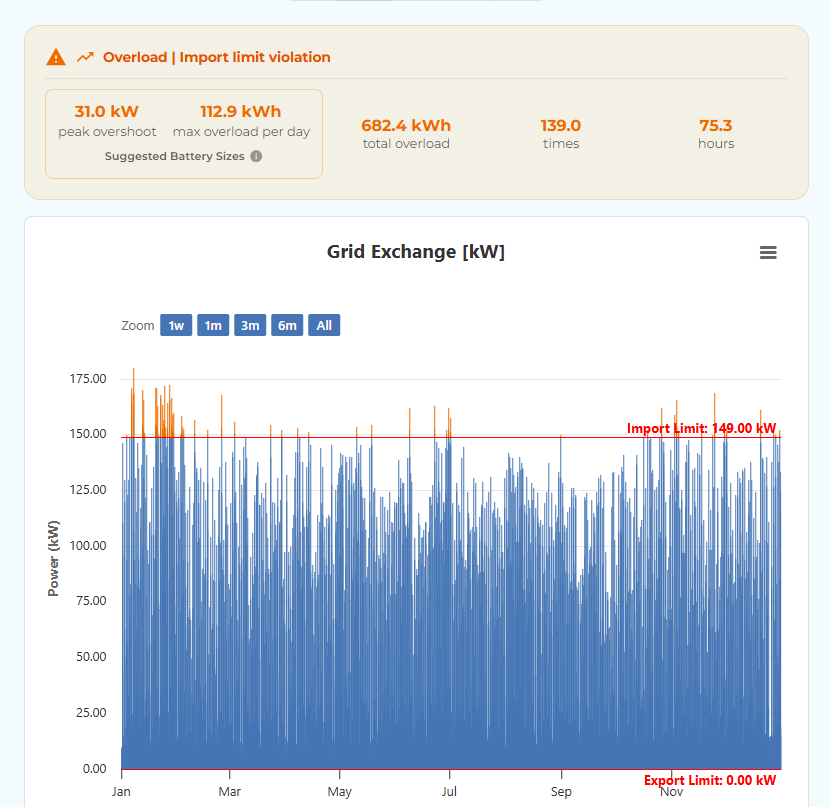
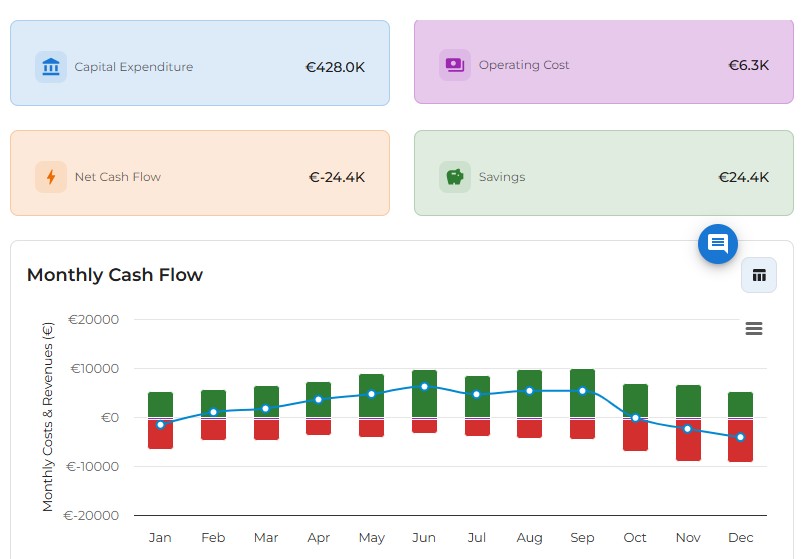
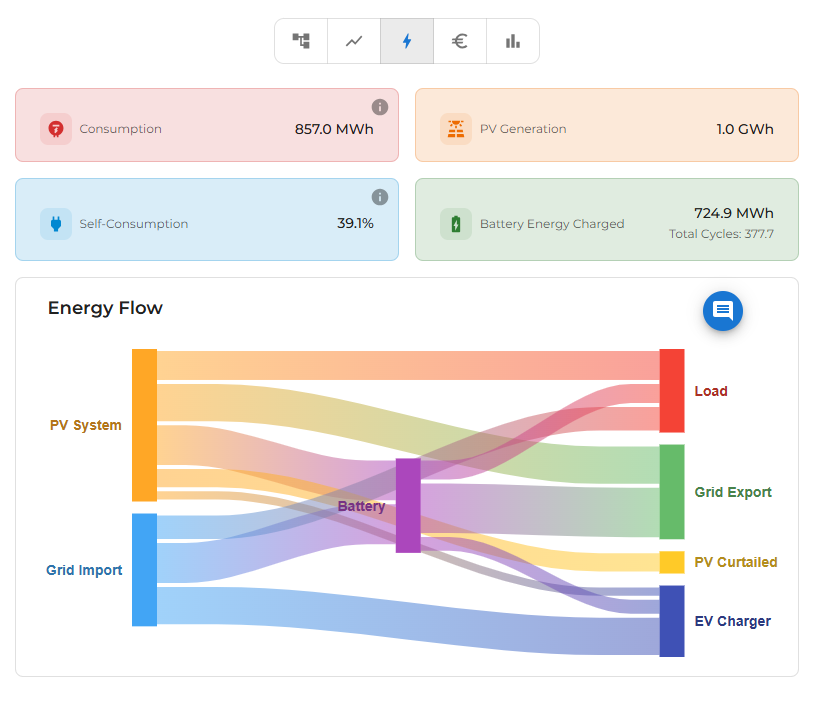
Use our free quickscan to get insight in savings, flexibility and smart solutions for energy storage.
Quick Scan
Get immediate insight into savings, flexibility and smart solutions for energy storage. Fill in the form to request a free business case simulation report
FAQ
Is battery storage only financially viable with subsidies?
No. A Battery Energy Storage System (BESS) can have a viable business case without subsidies. The financial value comes primarily from what the battery enables your business to do.
A BESS can, for example, reduce peak demand, increase the use of your own solar energy, enable energy trading or help you operate within the limits of an existing grid connection. Combining several of these applications can further strengthen the business case.
Subsidies should therefore be seen as an additional incentive. They can reduce the initial investment or shorten the payback period, but they do not have to be the reason for investing in battery storage.
Need help finding the right subsidy fit? Our experts are happy to help.
Why do governments subsidise battery energy storage systems?
Governments use subsidies to accelerate investments that contribute to the energy transition. Battery storage can help integrate more renewable energy, make electricity consumption more flexible and reduce pressure on increasingly congested electricity grids.
The Dutch Flex-e scheme is a good example. It supports businesses that make their electricity consumption more flexible and explicitly includes battery storage as one of the eligible measures.
At European level, the objectives are generally broader. Programmes such as the Connecting Europe Facility (CEF) support strategic energy infrastructure and cross-border projects.
Subsidies are therefore not simply intended to make batteries cheaper, but to accelerate developments that support wider energy and climate objectives.
Need help finding the right subsidy fit? Our experts are happy to help.
Where should I look for battery storage subsidies?
If you want financial support for purchasing and implementing a BESS at your business location, start with national and regional subsidy programmes.
These programmes are generally closer to actual implementation. In the Netherlands, for example, Flex-e can support investments in battery storage when they are used to make electricity consumption more flexible.
European programmes are generally more relevant to larger projects involving innovation, demonstration or strategic infrastructure. CEF Energy, for example, primarily targets eligible European energy infrastructure and cross-border projects rather than a standard commercial battery installation.
Need help finding the right subsidy fit? Our experts are happy to help.
Can I get a subsidy for a BESS used for peak shaving or grid congestion?
Yes, there are programmes specifically aimed at making electricity consumption more flexible and reducing problems caused by limited grid capacity.
The Dutch Flex-e programme is a clear example. In 2026, businesses with a large-user electricity connection can apply for support for flexibility measures, including battery storage. The programme includes support for flexibility scans and feasibility studies as well as the implementation of flexibility measures.
Whether your BESS qualifies depends on the requirements of the current funding round, including the size of the installation and how it will be used.
Need help finding the right subsidy fit? Our experts are happy to help.
Can I get a subsidy for battery storage combined with solar panels?
Yes, but usually not simply because a battery is connected to solar panels. Eligibility depends on what the complete project achieves and the objectives of the subsidy programme.
A battery can make solar generation more useful by storing electricity that cannot be consumed immediately and making it available later. This can increase self-consumption and reduce peak loads or pressure on the grid.
Depending on the country and programme, financial support may therefore be available for the battery itself, the wider energy project or the flexibility that the combination of solar and storage provides.
Need help finding the right subsidy fit? Our experts are happy to help.
Can battery storage subsidies be combined with other financial incentives?
Sometimes. A battery storage project may qualify for more than one form of financial support, but this does not automatically mean that they can all be used for the same investment.
National and European state aid rules can limit how much public support a project may receive. Individual schemes may also exclude certain combinations or require other subsidies to be deducted when calculating the eligible amount.
If several programmes appear relevant, check their combination and state aid conditions before submitting the applications.
Need help finding the right subsidy fit? Our experts are happy to help.
How often do battery storage subsidies and funding programmes change?
Most subsidy programmes work with individual funding rounds or application periods. New rounds may be introduced annually, but the budget, eligibility requirements, subsidy amounts and application dates can change from one round to the next.
For example, the conditions of the Dutch Flex-e scheme changed between its funding rounds, while European programmes such as CEF publish separate calls with their own budgets, deadlines and eligibility criteria.
This means that a subsidy that was available for a battery project last year may have different conditions this year, or may no longer be available at all.
Need help finding the right subsidy fit? Our experts are happy to help.
How do I know which battery subsidy applies to my project?
Start with three questions: where will the battery be installed, what will it be used for and what type of project are you developing?
For a business purchasing a BESS for its own location, national and regional programmes are usually the most relevant starting point.
Once you know the location, application and scope of your battery project, you can compare these characteristics with the eligibility requirements of the current subsidy programmes.
Need help finding the right subsidy fit? Our experts are happy to help.
Energy storage subsidy advice
Not sure which subsidy programs may be of interest to your company? Exact information about current schemes and the criteria you need to meet can be found on the RvO website. Can’t find it? No worries, we are happy to show you the way. We think along with you about the best battery solution and indicate directly which business subsidies for battery storage are available for your application.
Grid congestion solutions
Whether you want to store energy from solar panels to optimize your self-consumption, avoid grid congestion with peak shaving, or need a complete off-grid power supply: with energy storage from Cellpower, you have a reliable solution on your hands.


Reduce costs with subsidies for battery storage
Purchasing a new and innovative system shows courage, but it also comes at a cost. The government is very aware of the importance of the energy transition and therefore companies and institutions that want to become more sustainable are supported with all kinds of schemes and subsidies. Would you like to know more about the possibilities of your own battery storage and how you can optimize your energy consumption? Please contact us to schedule an appointment. We are happy to think along with you about a sustainable solution and continuity in your business processes!
Customer stories
-
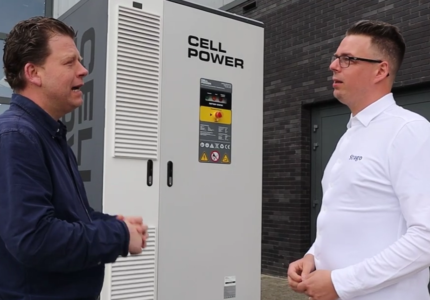
314 kWh – Strago Electro
“With this energy storage system we can use 70% of our own generated power instead of only 20%.” How to use Cellpower energy storage to increase self-consumption.
-
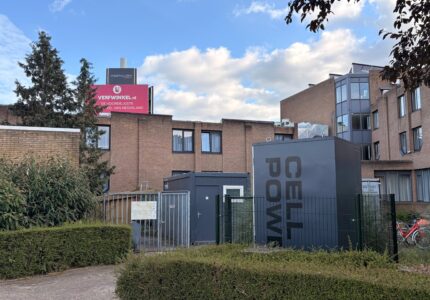
314 kWh – Postillion Hotel Bunnik
Postillion Hotel Bunnik makes sure they always have enough power with their very own Cellpower energy storage system
-
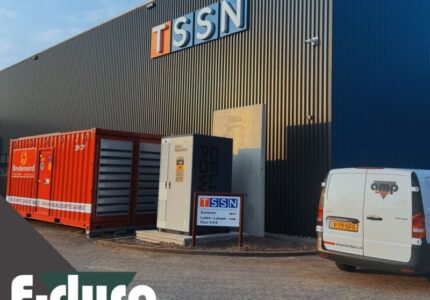
261 kWh – TSSN
TSSN chooses Cellpower energy storage for peakshaving and increasing self-consumption of their sustainably generated power