The electrification of the vehicle fleet presented KlokGroep with a challenge: more electric cars also meant increased demand for charging capacity. But it was precisely then that they ran up against the limits of the power grid. The solution? A smart charging station with its own energy generation, battery storage, and forty charging points. Project manager Mark Beekman and sustainability manager Thijs Pleijhuis-Kleve talk about it.
“A few years ago, we started electrifying our fleet,” explains Pleijhuis-Kleve. “To do so, we installed extra charging stations on our premises. We soon discovered that the contracted capacity available for our office was insufficient to charge the cars.
We applied to the grid operator for a higher capacity connection. However, we were denied this due to grid congestion in the Netherlands.
We tried to use load balancing to intelligently distribute the available power across the charging stations. But ultimately, there was simply too little capacity available to properly charge all the cars. At the same time, the number of electric cars within our organization continued to grow rapidly.”
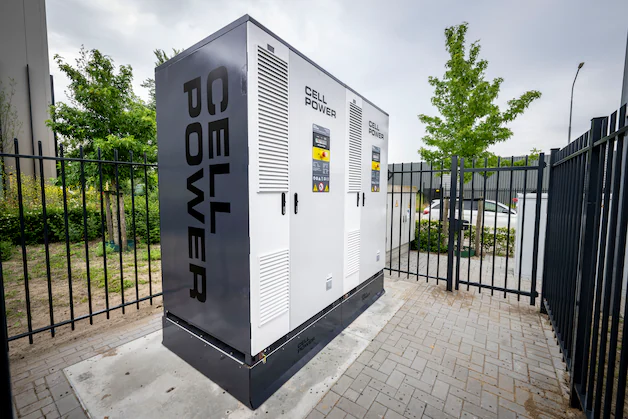
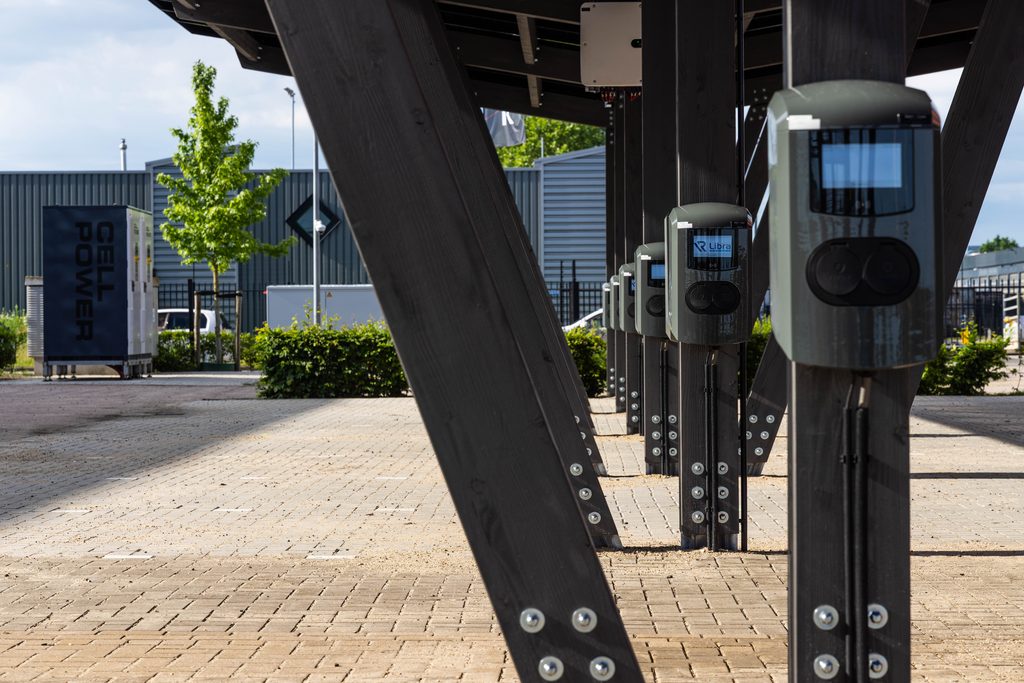
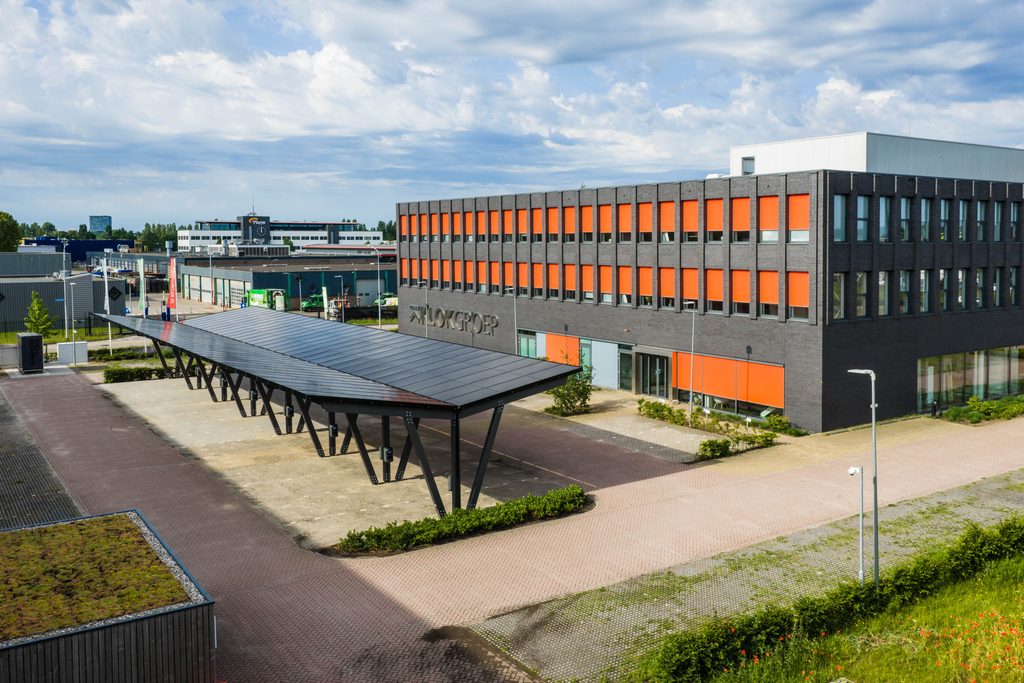
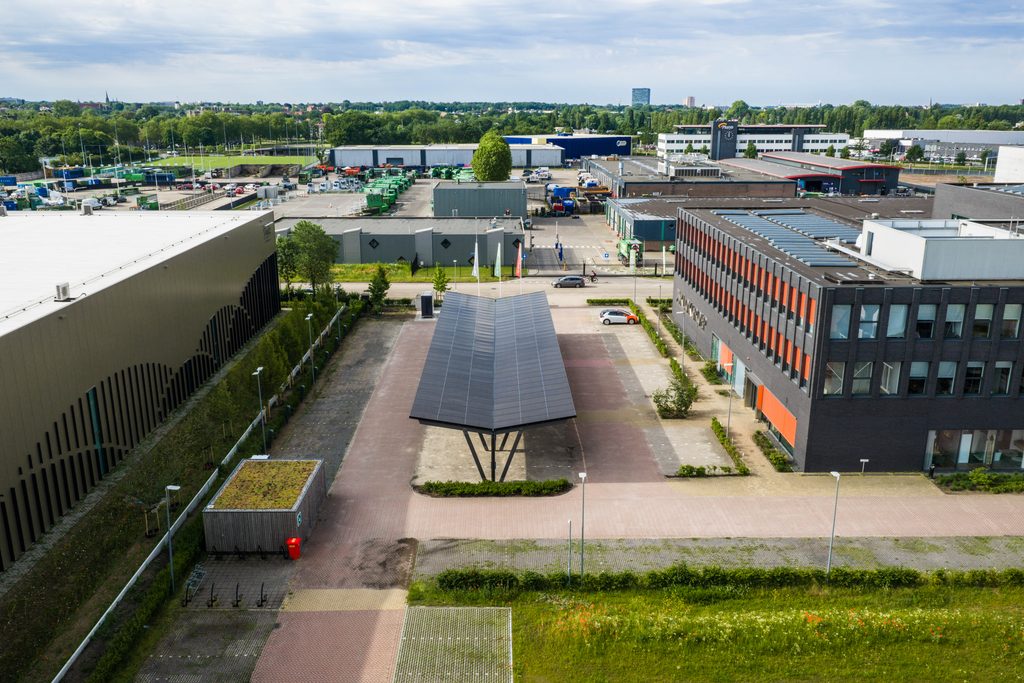
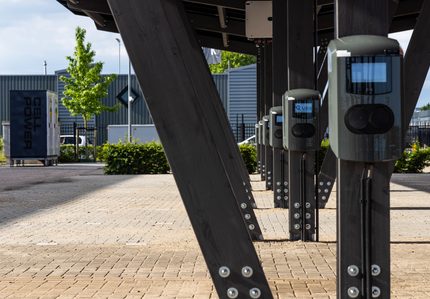
That is why we applied to the grid operator for a higher capacity connection. However, we were denied this due to grid congestion in the Netherlands. Then we had to ask ourselves: what now? We wanted to be able to continue providing good support to our employees. This ultimately led to the plan for a charging plaza with additional charging points, battery storage in the form of rechargeable batteries, and 200 solar panels on the carport above the charging stations to generate a portion of its own power as well.
“We also have to use electricity from the grid. We do this when the electricity price is low. For example, at night, when there is little demand, or in the middle of the day when the sun is shining and it is windy. If we have surplus electricity, we can feed it back into the grid when demand is high and the price is therefore also high.“
Mark Beekman
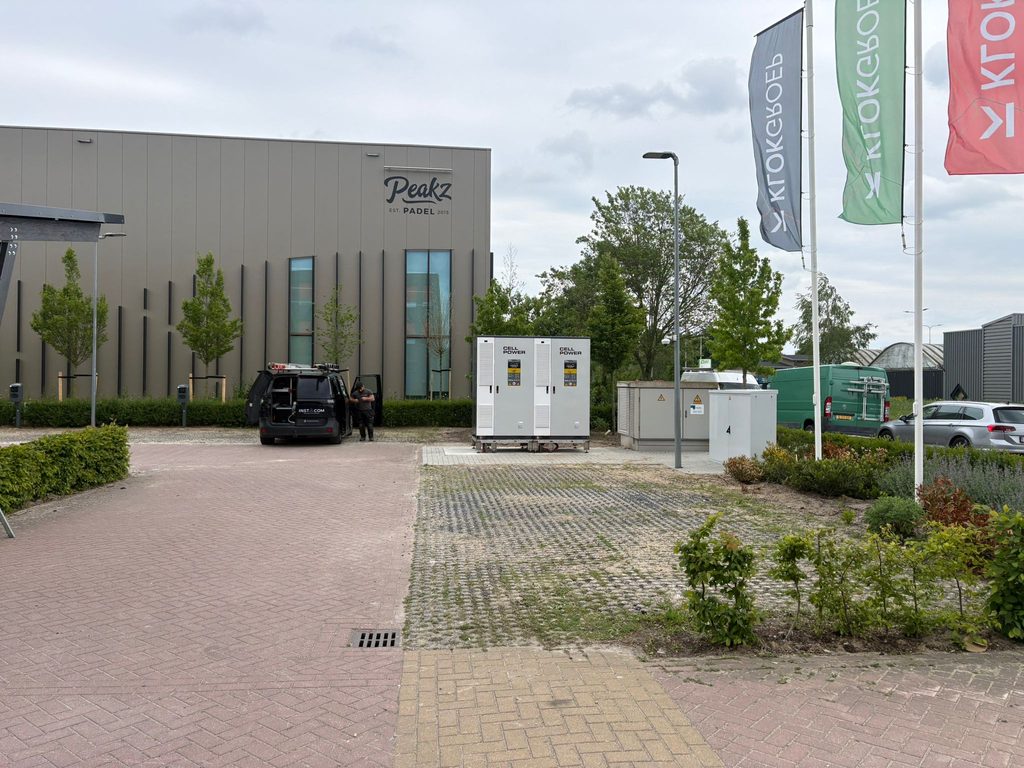
“With the two batteries and forty charging points we currently have, we are well set for the coming years,” says Pleijhuis-Kleve. “But the system is built modularly. If more charging capacity is needed in the future, we can expand relatively easily.
For example, everything is already prepared for the arrival of a third battery. You prefer to incorporate those kinds of things directly into the design. It may require a larger investment now, but it prevents having to make major adjustments again later and having to dig up the square.”
Want help finding the right battery?
Our experts can help you find the right battery solution. Whether it’s for energy storage, electrification projects, motive power or standby & backup applications.
Achterhoek-Comfort – Mobility scooters with GEL batteries
We have been delighted to work with Intercel (formerly Wetac) for many years. Both before and after the merger, we have been very satisfied with the products…
628 kWh – KlokGroep
“We applied to the grid operator for a higher capacity connection. However, we were denied this due to grid congestion in the Netherlands.”
314 kWh – Strago Electro
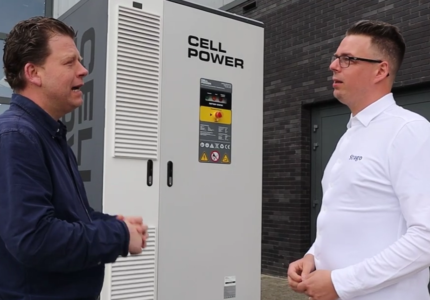
“With this energy storage system we can use 70% of our own generated power instead of only 20%.” How to use Cellpower energy storage to increase self-consumption.