

Yes, a lithium battery pack can be fully customized for a specific machine. Engineers can tailor voltage, capacity, physical dimensions, communication interfaces, thermal management, and mechanical integration to match the exact requirements of the target application. This level of customization is particularly relevant for OEMs, machine converters, and industrial operators who cannot rely on off-the-shelf solutions. The sections below address the most common questions about how custom lithium battery development works in practice.
What specifications can be customized in a lithium battery pack?
Nearly every technical parameter of a lithium battery pack can be customized, including voltage, capacity, cell chemistry, physical dimensions, connector types, communication protocols, thermal management, and the Battery Management System (BMS). This breadth of customization allows engineers to build a pack that integrates directly into a machine rather than requiring the machine to accommodate a generic product.
In practical terms, voltage is configured by arranging cells in series, while capacity is scaled by adding cells in parallel. For off-highway and industrial machines, this matters because duty cycles, peak power demands, and runtime requirements vary significantly between a compact excavator and a terminal tractor, for example. Cell chemistry selection is equally important: lithium batteries based on Lithium Iron Phosphate (LiFePO4) are frequently chosen for their thermal stability, long cycle life, and safety profile, while other chemistries may suit applications where maximum energy density is the priority.
Beyond electrochemistry, the mechanical envelope of the pack can be shaped to fit available space within a machine frame, including counterweight integration where structural requirements demand it. Communication architecture is another customizable layer: packs can be built to communicate via CAN bus or other ECU-compatible protocols, enabling the machine’s control system to monitor state of charge, temperature, and fault conditions in real time. Thermal management systems, including liquid cooling and integrated heating for cold-environment operation, round out the key parameters that can be engineered to specification.
How does the custom lithium battery design process work?
The custom lithium battery design process typically follows a co-creation model, in which the battery engineer and the client’s engineering team work together from the initial concept through to series manufacturing. This collaborative approach ensures that the battery is not designed in isolation but is optimized as part of the complete machine system.
The process generally moves through several stages. It begins with a technical intake phase, where application data is gathered and performance targets are defined. From there, engineers develop a concept design covering cell selection, pack architecture, BMS configuration, and mechanical layout. Prototypes are built and tested under conditions that reflect the machine’s actual operating environment, including temperature extremes, vibration, and load cycles. Validated designs then move into compliance review before series production begins.
Working directly alongside client engineers at each stage has a measurable impact on project outcomes. Assumptions can be validated early, design conflicts are identified before tooling begins, and regulatory requirements such as cell safety standards and thermal runaway prevention are incorporated from the start rather than retrofitted. This reduces late-stage redesigns and keeps battery development aligned with the machine’s production schedule.
What machine or application data is needed before customization begins?
Before a custom lithium battery pack can be designed, engineers need a clear picture of how the machine operates, what energy it requires, and the environment in which it will work. The more precise this data, the more accurately the battery can be sized and configured to deliver the right performance over the machine’s full service life.
The most critical inputs include:
- Nominal operating voltage required by the machine’s drivetrain or electrical system
- Energy capacity needed to meet runtime targets between charges
- Peak and continuous power demand, including any high-current events such as motor starts or hydraulic actuation
- Duty cycle profile, including daily hours of operation, depth of discharge, and opportunity charging windows
- Physical envelope, including available installation space, weight limits, and any structural role the battery must fulfill such as a counterweight function
- Operating environment, covering temperature range, exposure to dust and moisture, and vibration levels
- Communication requirements, including the machine’s ECU and CAN bus architecture
- Charging infrastructure available at the point of use, including connector standards such as CCS2
Applications operating in regulated or noise-sensitive environments, such as urban construction sites or airport operations, may also require specific emissions documentation or noise certification inputs that influence design decisions from the outset.
What’s the difference between a modified standard pack and a fully custom battery?
A modified standard pack starts from an existing battery design and adjusts a limited number of parameters, typically connector type, voltage configuration, or enclosure, while keeping the core cell arrangement and BMS unchanged. A fully custom battery is engineered from the ground up to match the machine’s specific requirements, with every parameter open to design.
Modified standard packs are faster and less expensive to develop, and they are a practical choice when a machine’s requirements fall reasonably close to an existing product’s specifications. They work well in applications where voltage and capacity needs align with a standard configuration and where physical integration does not require a unique enclosure or mounting solution.
Fully custom packs are the right choice when the machine imposes requirements that no standard product can meet. This includes situations where the battery must serve a dual mechanical function such as acting as a structural counterweight, where the operating environment demands integrated liquid thermal management, where communication must be deeply integrated with a proprietary ECU, or where the energy system must be optimized as a whole rather than as a standalone component. For heavy-duty off-highway machines operating under intensive duty cycles, the investment in full customization typically results in a battery that lasts longer, performs more reliably, and delivers a lower total cost of ownership over its service life.
What certifications does a custom lithium battery pack need?
A custom lithium battery pack for industrial or off-highway use must meet a range of safety, performance, and regulatory standards before it can be deployed. The specific certifications required depend on the application sector, the machine’s operating environment, and the markets in which it will be sold.
For most European applications, compliance with the EU Battery Regulation is a baseline requirement, covering safety, performance, and sustainability criteria across the battery’s lifecycle. Cell-level certifications such as IEC 62619 for industrial lithium batteries and UN 38.3 for transport safety apply broadly. Functional safety standards, including ISO 13849 and IEC 62061 for machinery applications, govern how the BMS interacts with the machine’s safety systems and how thermal runaway risks are managed.
Incorporating compliance into the design process from the beginning, rather than addressing it after the pack is built, is the most efficient approach. Regulatory requirements around cell safety, thermal management, and functional safety can influence fundamental design decisions, so treating certification as a design input rather than a final checkpoint eliminates costly rework and delays before market entry.
How long does it take to develop a custom lithium battery pack?
The development timeline for a custom lithium battery pack typically ranges from several months for a modified standard configuration to well over a year for a fully engineered, compliance-certified pack designed for a new machine platform. The exact duration depends on the complexity of the application, the maturity of the machine design, and how early the battery development is integrated into the broader project schedule.
Key factors that influence the timeline include the number of design iterations required during prototyping, the time needed for environmental and functional testing under real operating conditions, and the certification pathway required for the target market. Projects where the client’s engineering team and the battery engineer collaborate from the earliest concept phase consistently move faster, because design conflicts and compliance gaps are resolved before they require expensive corrections.
For OEMs planning a new machine platform, aligning battery development with the machine’s engineering program from the outset is the most effective way to avoid schedule delays. Treating the battery as a late-stage procurement item rather than a core engineering component is one of the most common causes of project overruns in machine electrification programs.
Intercel’s Custom Battery Pack Expertise for Your Machine
At Intercel, we have been engineering battery solutions for demanding industrial and off-highway applications for over 40 years. Our electrification division specializes in designing and manufacturing custom lithium battery packs for OEMs and machine converters across construction, agriculture, material handling, mining, municipal services, and industrial equipment sectors.
Working directly alongside your engineering team, we handle the full development process from technical intake through to series manufacturing:
- Co-creation from concept: We work with your engineers to define voltage, capacity, layout, and communication architecture together, ensuring the battery is optimized as part of the complete machine system
- Purpose-built packs: Our Cellpower off-highway battery packs are engineered for machines operating under demanding conditions, with options for integrated heating and cooling, CCS2 fast charging, counterweight functionality, and CAN bus communication
- Compliance built in: Regulatory requirements including cell safety, thermal runaway prevention, and functional safety are incorporated from the start of the design phase, not added at the end
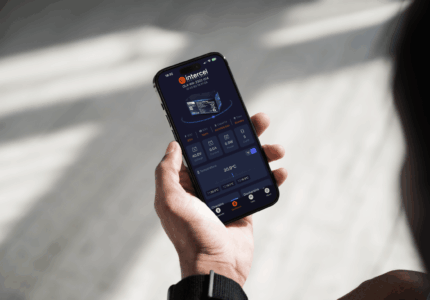
- Complete energy systems: Every pack we deliver includes a BMS, thermal management, chargers, IoT communication modules, and robust casing, supplied as a tested, plug-and-play unit
- White-label and custom branding: Packs can be produced under your brand or as Cellpower-branded units, depending on your commercial requirements
If you are evaluating the electrification of a machine or need a custom lithium battery pack that fits a specific application, our specialists are ready to work through the technical requirements with you. Contact our team to start the conversation.