


The core of every battery system
Every battery pack starts with one fundamental choice:
do you build with modules, or do you build with individual cells?
The answer has a major impact on energy density, cost, flexibility and integration. At Intercel, we support both approaches, because every off-highway machine has its own mechanical constraints, duty cycle and performance targets.
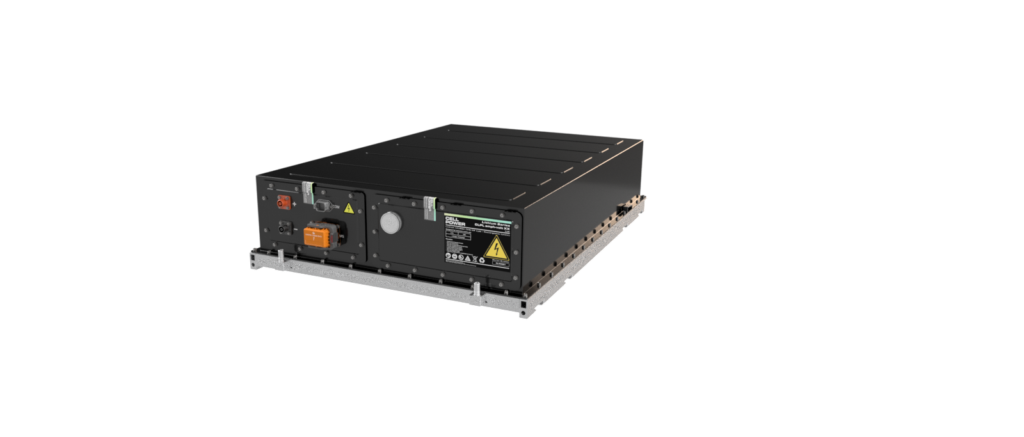
Module-based architecture
✓ Fast and commercially efficient
Module-based designs offer practical advantages: shorter engineering timelines, lower cost and simpler assembly.
If your machine has sufficient installation space, modules are a strong choice. They work well for machines with moderate energy requirements or fleets where cost-efficiency is essential. The trade-off: modules offer less flexibility in shape.
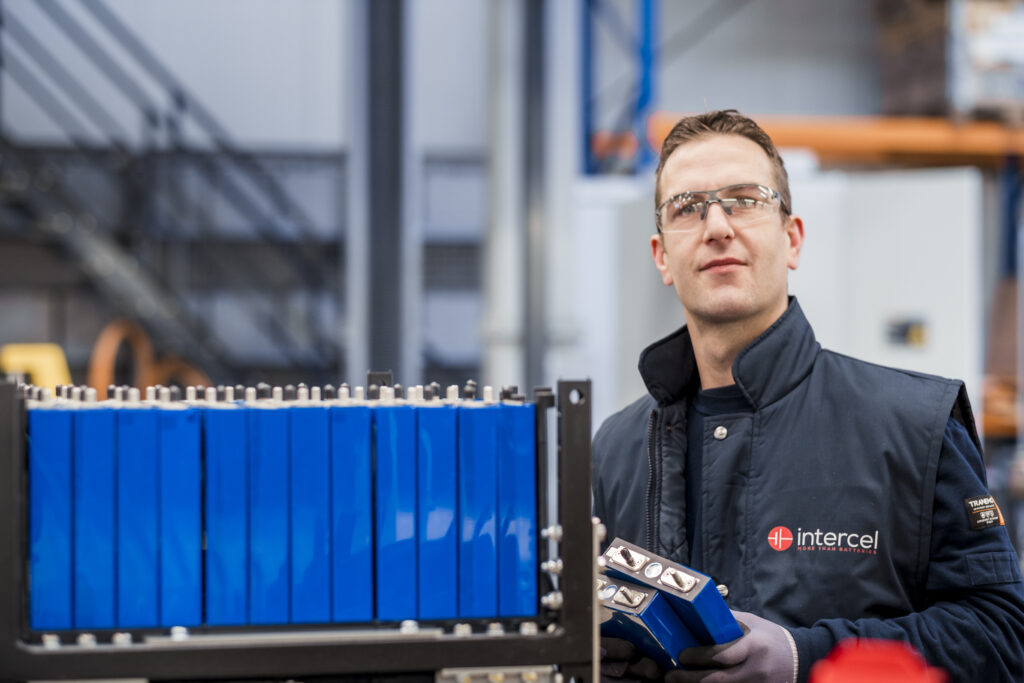
Cell-based architecture
✓ Maximum energy density and shape flexibility
When space is limited or your machine demands long operating times, cell-based solutions deliver the best performance. By building the pack cell-by-cell, we can optimise every millimetre of available space and achieve the highest possible energy density. This approach is more engineering-intensive and therefore often more costly, but it enables designs that standard modules simply cannot match.
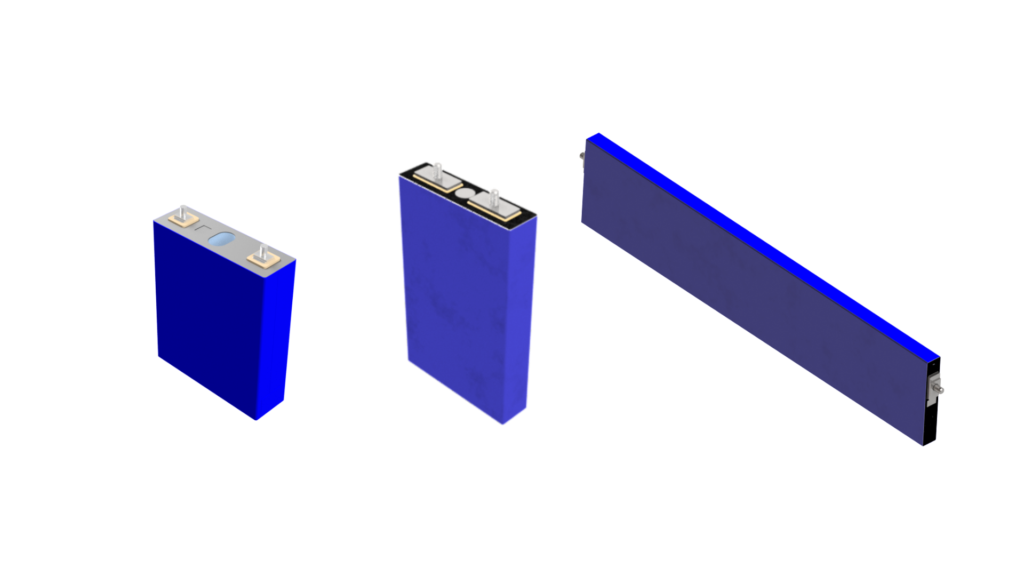
Cell chemistry options: LFP, LTO or NMC
Depending on your application, we help you choose the ideal chemistry:
- LFP – our recommended default for safety, long life and sustainability
- LTO – extremely fast charging and ultra-long cycle life
- NMC – highest energy density where weight is critical
Whatever the requirements – runtime, safety, cost or sustainability – we make sure the chemistry and architecture support your machine’s purpose.
Want help finding the right battery?
Our experts can help you find the right battery solution. Whether it’s for energy storage, electrification projects, motive power or standby & backup applications.
We’re happy to help


