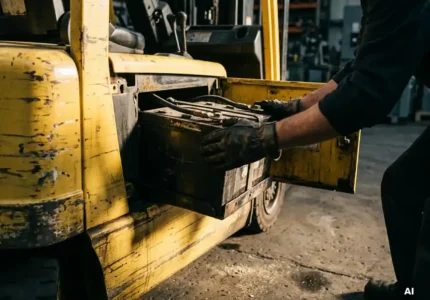


Choosing the right battery pack for industrial machinery comes down to matching your application’s energy demands, duty cycle, and operating environment to the correct battery technology, voltage, and capacity. For most industrial equipment, the choice falls between lithium and lead-acid chemistries, each with distinct strengths depending on how intensively the machine operates. The sections below walk through every key decision point, from basic specifications to safety compliance and service life.
What factors determine which battery pack fits industrial machinery?
The right battery pack for industrial machinery depends on four core factors: how the battery is used (cyclic or standby), how much energy the machine needs, the physical constraints of the installation, and the operating environment. Getting these factors right before selecting a battery pack prevents costly mismatches and unplanned downtime.
Start with the duty cycle. A battery used in a forklift, floor scrubber, or automated guided vehicle (AGV) charges and discharges repeatedly throughout the day: this is a cyclic application. A battery providing backup power to a control panel or safety system sits on standby most of the time and only delivers power during a failure. These two use cases require fundamentally different battery designs.
Next, consider the operating environment. High ambient temperatures accelerate chemical ageing in lead-acid batteries and require careful thermal management in lithium systems. Machines exposed to heavy vibration, such as construction equipment or mining vehicles, need battery packs with high mechanical resistance. Cold environments reduce available capacity across all chemistries, though lithium batteries with integrated heating can compensate for this.
Finally, factor in weight and space. In mobile machinery, every kilogram affects performance and payload. If installation space is tight or weight reduction improves the machine’s efficiency, the energy density of the battery chemistry becomes a deciding factor rather than a secondary concern.
- Duty cycle: Cyclic (frequent charge/discharge) or standby (long idle periods)
- Energy demand: Voltage and capacity requirements of the machine
- Environment: Temperature range, vibration, humidity, and emission regulations
- Physical constraints: Available space, weight limits, and mounting requirements
What’s the difference between lithium and lead-acid battery packs for industrial use?
Lithium battery packs offer higher energy density, faster charging, longer cycle life, and minimal maintenance compared to lead-acid battery packs. Lead-acid batteries have a lower upfront cost and remain a practical choice for low-intensity or standby applications. The right choice depends on how intensively the machine operates and what total cost of ownership looks like over the battery’s lifetime.
Lithium battery packs
Lithium batteries store more energy in a smaller, lighter package, a major advantage in mobile industrial equipment where payload and space matter. They support opportunity charging, meaning operators can top up the battery during short breaks without significantly shortening its service life. Lithium packs also deliver a stable voltage throughout the discharge cycle, which keeps machine performance consistent right up to the point of recharge. Their cycle life spans hundreds to thousands of charge cycles before capacity drops noticeably, and they require virtually no routine maintenance.
For applications involving intensive daily use, such as electric forklifts, AGVs, construction equipment, or electric work vehicles, lithium is typically the stronger long-term investment. The higher initial purchase price is usually offset by lower maintenance costs and a longer service life, resulting in a lower total cost of ownership over the battery’s lifetime.
Lead-acid battery packs
Sealed AGM and gel batteries remain a reliable and cost-effective option for applications with lower daily usage or where the lowest initial price is the primary requirement. AGM batteries absorb the electrolyte in fibreglass mats, making them spill-proof and suitable for a wide range of orientations. Gel batteries tolerate deep discharge well and suit applications where full recharge is not always guaranteed. Flooded lead-acid batteries require periodic topping up with water, which adds a maintenance task that lithium eliminates entirely.
Lead-acid technology is well understood, widely available, and supported by established recycling infrastructure across Europe, a relevant consideration for businesses operating under strict environmental compliance requirements.
How do you calculate the right voltage and capacity for your application?
To calculate the right voltage and capacity for an industrial battery pack, match the nominal voltage to the machine’s electrical system and size the capacity in amp-hours (Ah) to cover the required runtime between charges, with a safety margin to avoid deep discharge. Undersizing capacity shortens battery life; oversizing adds unnecessary weight and cost.
Start with voltage. The battery pack must match the machine’s system voltage: common values in industrial equipment include 12V, 24V, 48V, 80V, and higher for heavy-duty applications. Using the wrong voltage damages both the battery and the machine’s electronics.
For capacity, calculate the machine’s average current draw in amperes and multiply by the required runtime in hours. This gives you the minimum amp-hour rating. For cyclic applications, avoid regularly discharging below 20% of rated capacity in lead-acid batteries; doing so significantly shortens service life. Lithium batteries tolerate deeper discharge without the same penalty, which means a lithium pack with a lower nominal Ah rating can often deliver the same usable energy as a larger lead-acid pack.
Also account for temperature. Cold operating environments reduce available capacity, so if your machinery operates outdoors in winter conditions, size the pack to deliver the required energy at the lowest expected temperature, not at room temperature.
What safety and compliance standards apply to industrial battery packs in Europe?
Industrial battery packs sold and used in Europe must comply with the EU Battery Regulation, which covers safety, sustainability, labelling, and end-of-life requirements. Additional standards apply depending on the application, including requirements for thermal runaway prevention, functional safety, and transport classification for lithium batteries.
The EU Battery Regulation, which has been phasing in requirements progressively, sets rules on carbon footprint declarations, recycled content, battery passports, and due diligence for supply chains. For industrial and electric vehicle batteries above a certain capacity threshold, compliance is not optional; it affects both market access and liability.
For lithium battery packs specifically, cell-level safety certifications (such as UN 38.3 for transport) and functional safety requirements for the Battery Management System (BMS) must be addressed from the design phase. Attempting to achieve compliance after the battery has been designed and tooled is expensive and often requires redesign. Building regulatory requirements into the co-creation process from the start eliminates this risk.
Sector-specific standards also apply. Batteries used in machinery operating in hazardous environments, such as mining or chemical processing, face additional classification requirements. Backup power batteries in hospitals or data centres must meet standards for reliability and runtime under load. Always verify which standards apply to your specific machine category and operating environment before finalising a battery specification.
When should you choose a custom battery pack over a standard one?
Choose a custom battery pack when no standard product matches your machine’s voltage, capacity, physical dimensions, or operating conditions, or when regulatory compliance, integration with machine systems, or performance requirements cannot be met off the shelf. Custom battery packs are particularly relevant for machine electrification projects and specialised industrial equipment.
Standard battery packs cover a wide range of common applications and are the faster, lower-cost starting point. For machines with conventional voltage and capacity requirements, a standard cyclic or standby battery from a well-matched product range is often the right answer. The decision shifts toward a custom pack when the application pushes beyond what standard products can reliably deliver.
Custom battery packs make the most sense in these situations:
- The machine requires a non-standard voltage, such as 614V or 747V, as seen in excavators and smelter environments
- The battery must also serve a mechanical function, such as acting as a counterweight in heavy equipment
- The installation space has unusual dimensions that no standard pack fits
- The machine operates in extreme conditions: high magnetic fields, aggressive temperatures, or corrosive environments
- The battery must integrate with proprietary machine control systems, IoT modules, or specialised charging infrastructure
- Regulatory compliance requires documented cell safety and thermal runaway prevention built into the design
Electrification projects, converting diesel-powered construction, agricultural, or municipal machinery to electric drive, almost always require custom battery development. The battery must fit the machine’s physical envelope, match its power demands, and often replace a structural component like a fuel tank or engine block.
How do you extend the service life of a battery pack in industrial equipment?
Extending the service life of an industrial battery pack comes down to correct charging, avoiding deep discharge, managing operating temperature, and using the right charger for the battery chemistry. Consistent attention to these factors can significantly increase the number of productive cycles before a replacement is needed.
Charging practice has the greatest impact on longevity. Always use a charger matched to the battery’s chemistry and voltage. An intelligent charger that automatically switches to trickle charging after a full charge prevents overcharging without requiring manual intervention. For lead-acid batteries, fully discharging and then fully recharging the battery, especially after periods of inactivity, helps maintain capacity. Never charge batteries in environments below 0°C, as this damages cells regardless of chemistry.
For cyclic lead-acid batteries, avoid regularly discharging below 20% of rated capacity. Each deep discharge cycle shortens the overall lifespan. If your application consistently demands deep discharges, lithium chemistry is the more durable choice, as it tolerates this without the same degradation penalty.
Temperature management matters throughout the battery’s life, not just during charging. Operating consistently above 20°C accelerates chemical ageing in lead-acid batteries. Where possible, store and operate batteries within their recommended temperature range. For lithium packs in demanding environments, integrated thermal management systems handle this automatically.
Finally, schedule regular checks. A battery that is beginning to fail often shows early signs: reduced runtime, slower charging, or voltage irregularities under load. Catching these signs early allows for planned replacement rather than unexpected downtime at a critical moment.
How Intercel helps you select and specify the right industrial battery pack
We help businesses across Europe find, specify, and source the right battery pack for industrial machinery, whether that means selecting the best standard product from our portfolio or developing a fully custom battery system from the ground up.
- Application-based advice: Our specialists analyse your duty cycle, voltage requirements, operating environment, and physical constraints to recommend the right battery chemistry, capacity, and configuration
- Standard and custom solutions: We supply a broad range of cyclic and standby battery packs under brands including Cellpower, pbq, and Move, alongside fully custom lithium battery systems for electrification and specialised industrial applications
- Compliance built in: Every custom battery system we deliver integrates a Battery Management System, thermal management, and documentation aligned with EU Battery Regulation requirements; compliance is part of the design, not an afterthought
- Co-creation with your engineers: For electrification and custom projects, we work directly with your technical team to validate specifications early, reduce redesign risk, and align battery development with your production schedule
- End-of-life support: We offer battery recycling solutions, including our free Intercel Battery Recycling Box, so your operations stay compliant throughout the battery’s full lifecycle
If you are specifying a battery pack for industrial equipment and want to make sure you get the right solution the first time, contact our specialists. We are ready to help you find the battery that fits your machine, your environment, and your compliance requirements.