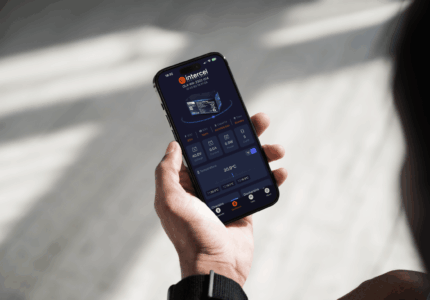
Industrial lithium batteries can typically be charged to 80% capacity in one to two hours, and to full capacity in two to four hours, depending on the charger output and battery size. The key variable is the charge rate relative to battery capacity, expressed as a C-rate. Chemistry, thermal management, and battery management system (BMS) settings also play a significant role in how quickly a charge can be safely completed. The sections below unpack each of these factors in detail.
What factors determine how fast a lithium battery can charge?
The charging speed of an industrial lithium battery is determined by four primary factors: the charge rate (C-rate), battery chemistry, thermal management, and the battery management system. Together, these variables set the upper and lower limits of how quickly energy can be transferred into the battery without causing damage or reducing service life.
The charger output current is the most direct lever. A higher current means more energy delivered per minute, but the battery’s internal resistance and chemistry set a ceiling on how much current it can safely accept. Push beyond that ceiling and heat builds up, accelerating cell degradation.
Thermal management is equally important in industrial settings. Batteries operating in warm environments or under heavy continuous load generate more internal heat during charging. Without active cooling or adequate ventilation, the BMS will reduce the charge current to protect the cells, effectively slowing the charge. Conversely, charging below 0°C is often restricted or disabled by the BMS entirely to prevent lithium plating, a form of irreversible cell damage.
The state of charge at the start of a session also matters. Lithium batteries accept charge fastest when they are partially depleted. As the battery approaches full capacity, the BMS transitions from a constant current phase to a constant voltage phase, during which the current tapers off and the final percentage takes proportionally longer to complete.
What is a C-rate and how does it affect charge time?
A C-rate is a standardised measure of charge or discharge current relative to a battery’s total capacity. A charge rate of 1C means the battery is charged with a current equal to its full capacity in ampere-hours, theoretically filling it in one hour. A rate of 0.5C would take approximately two hours; a rate of 2C would halve the time to around 30 minutes.
In practice, the relationship between C-rate and charge time is not perfectly linear. The constant voltage phase at the end of charging means the final 20% of capacity takes longer than a simple calculation suggests. For most industrial lithium batteries, a charge rate between 0.5C and 1C is the standard operating range, delivering a full charge in roughly one to two hours of constant current charging plus additional tapering time.
Some industrial lithium cells, particularly those based on Lithium Iron Phosphate (LFP) chemistry, are rated to accept charge rates of up to 1C or even 2C under controlled conditions. However, consistently charging at the upper limit of the rated C-rate accelerates cell ageing. For applications where battery longevity is a priority, operating at a more moderate charge rate, such as 0.5C, extends cycle life significantly.
When specifying a charger for an industrial application, matching the charger’s output current to the battery’s recommended charge C-rate is essential. Oversizing the charger does not automatically speed up charging if the BMS limits the incoming current to protect the cells.
How does lithium battery chemistry affect charging speed?
Different lithium chemistries have different maximum charge rates, internal resistance profiles, and thermal characteristics, all of which directly affect how quickly they can be safely charged. For industrial applications, Lithium Iron Phosphate (LFP or LiFePO4) is the most widely used chemistry, and its charge behaviour differs meaningfully from other lithium variants.
LFP batteries are known for their high thermal and chemical stability. They tolerate moderate charge rates well and are less prone to overheating than chemistries such as Lithium Cobalt Oxide (LiCoO2). This stability makes LFP a practical choice for industrial environments where charging conditions are not always perfectly controlled. The trade-off is that LFP has a somewhat lower energy density than Nickel Manganese Cobalt (NMC) chemistries, meaning a larger or heavier pack may be needed for the same energy storage.
NMC batteries generally support higher charge rates and offer greater energy density, which is advantageous when space or weight is constrained. However, they require more precise thermal management during fast charging, and their higher sensitivity to overcharging makes a well-calibrated BMS non-negotiable.
For heavy-duty industrial applications such as construction equipment, excavators, and AGVs, LFP is typically the preferred chemistry because its long cycle life, safety profile, and reliable performance under demanding conditions outweigh the energy density advantage of NMC. Understanding the chemistry of the battery in your application is therefore a prerequisite for selecting the right charging strategy. For a broader overview of lithium battery types and their characteristics, see lithium batteries.
Can industrial lithium batteries be opportunity charged?
Yes, industrial lithium batteries are well suited to opportunity charging, which means topping up the battery during short breaks or idle periods rather than waiting for a full discharge cycle. Unlike lead-acid batteries, lithium batteries do not suffer from memory effect, and partial charges do not significantly shorten their service life when managed correctly by the BMS.
Opportunity charging is one of the most practical advantages lithium batteries offer in industrial operations. A forklift, sweeper, or AGV can be plugged in during a 15-minute break and recover a meaningful portion of its charge, extending operational availability without requiring a dedicated charging window. This is particularly valuable in multi-shift environments where downtime for charging is costly.
The BMS plays a central role in making opportunity charging safe. It monitors cell voltages, state of charge, and temperature in real time, adjusting the incoming charge current to keep each cell within safe limits regardless of how frequently or irregularly the battery is charged. This dynamic control is what allows lithium batteries to tolerate the irregular charging patterns that come with opportunity use.
One practical consideration is that very frequent opportunity charging at high C-rates does generate more cumulative heat than slower, less frequent full charges. In applications where opportunity charging is the primary charging strategy, selecting a battery with appropriate thermal management and a BMS configured for that usage pattern will protect long-term cycle life.
What happens if you charge a lithium battery too fast?
Charging a lithium battery faster than its rated maximum C-rate causes excessive heat generation inside the cells, which accelerates degradation and can permanently reduce capacity. In severe cases, overcharging or extreme thermal stress can trigger thermal runaway, a self-sustaining chain reaction that poses a serious safety risk.
The most common consequence of sustained fast charging beyond the rated limit is accelerated calendar ageing. The battery’s cycle life, which might otherwise span thousands of charge-discharge cycles, shortens noticeably. Capacity fade sets in earlier, meaning the battery delivers less runtime per charge and needs replacing sooner, increasing the total cost of ownership.
Lithium plating is another risk associated with charging too quickly, particularly at low temperatures. When current is applied faster than the anode can absorb lithium ions, metallic lithium deposits form on the electrode surface. These deposits are irreversible and can cause internal short circuits over time. This is why the BMS in a well-designed industrial battery system restricts or disables charging below 0°C, even if it means the operator must wait for the battery to warm up before charging can begin.
A properly specified BMS will prevent most of these scenarios by capping the incoming charge current and cutting off charging if temperatures exceed safe thresholds. However, using a charger that is not matched to the battery’s specifications, or bypassing BMS protections, removes these safeguards entirely. This is why charger selection and system integration are as important as the battery itself.
How do you choose the right charger for industrial lithium batteries?
The right charger for an industrial lithium battery must match the battery’s nominal voltage, support the correct charging protocol (typically CC/CV: constant current followed by constant voltage), and deliver a charge current within the battery’s rated C-rate range. A charger that meets these three criteria will charge the battery safely and efficiently without shortening its service life.
Start with voltage compatibility. A charger must be rated for the battery’s nominal voltage, whether that is 24V, 48V, or a higher voltage system used in heavy industrial equipment. Mismatched voltage is one of the most damaging errors in battery charging and can cause immediate cell damage.
Next, confirm the charge current output. Divide the battery’s capacity in ampere-hours by the desired charge time in hours to find the required current. For example, a 200Ah battery charged at 0.5C requires a 100A charger output. Verify that this falls within the manufacturer’s recommended charge current range before selecting the charger.
Lithium-specific chargers are essential. A charger designed for lead-acid batteries uses a different voltage profile and will not correctly terminate charging for a lithium cell, risking overcharge. Always use a charger explicitly rated and configured for the lithium chemistry in your battery, whether LFP or another variant.
Additional features worth evaluating for industrial environments include temperature compensation inputs, communication protocols for BMS integration, protection against reverse polarity and short circuits, and housing ratings appropriate for the operating environment. In applications where opportunity charging is frequent, a charger with a fast charge mode that the BMS can regulate via communication is a practical investment. Chargers are available in a range of formats, from compact plug chargers to high-current industrial table chargers, with outputs from under 10A up to 50A and beyond for large battery systems.
Intercel’s expertise in industrial lithium battery charging
At Intercel, we have been helping industrial businesses select, configure, and operate battery systems since 1985. When it comes to lithium battery charging in demanding applications, we bring together deep technical knowledge, a broad portfolio of compatible chargers and batteries, and hands-on experience across sectors including material handling, construction, cleaning, and electrification of heavy-duty machinery.
- We supply lithium battery systems with fully integrated BMS, thermal management, and IoT communication, delivered as plug-and-play units ready for your application
- Our portfolio includes industrial chargers from leading brands such as IEB, Fronius, MEC, and Delta-Q, all matched to lithium chemistries and industrial duty cycles
- We advise on charge rate selection, opportunity charging strategies, and charger-battery compatibility to protect cycle life and reduce total cost of ownership
- For custom battery systems, our engineers work with your team from the design phase to ensure charging infrastructure and battery specifications are aligned from the start
- We support businesses across Europe with technical advice, fast delivery, and long-term service partnerships
Whether you are replacing an existing system, specifying a new industrial battery, or evaluating the move from lead-acid to lithium, our specialists are ready to help you make the right choice. Contact our team to discuss your charging requirements and find the solution that fits your operation.