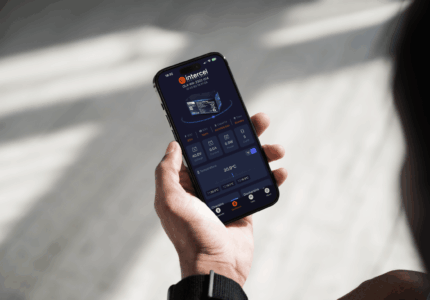


Developing a custom lithium battery system typically takes between 9 and 24 months from initial brief to production-ready delivery. The exact timeline depends on the complexity of the application, the number of development iterations required, and the certification path the system must follow. The sections below break down each phase, the factors that compress or extend it, and the decisions that determine how quickly your project can move forward.
What factors determine the development timeline?
The single biggest driver of custom lithium battery development timelines is application complexity. A compact battery pack for a light electric vehicle follows a very different path than a high-voltage system for a heavy-duty excavator or an industrial robot. Beyond complexity, three additional factors consistently shape how long a project takes: the degree of customisation required, the regulatory environment the battery must operate in, and how early in the process all technical requirements are defined.
Mechanical integration requirements matter enormously. If the battery must function as a structural counterweight, resist magnetic fields, or incorporate liquid cooling, each of those constraints adds engineering time. Voltage and capacity specifications also play a role: higher-voltage systems require more cells in series, more sophisticated battery management system (BMS) logic, and more rigorous safety validation. Applications in regulated environments such as mining, aviation support, or medical equipment face additional compliance layers that extend timelines regardless of how smoothly the engineering phase goes.
Finally, the quality of the initial brief affects everything downstream. Projects where the client can provide detailed load profiles, duty cycles, installation dimensions, and environmental conditions from the outset move significantly faster than those where requirements evolve through the development process.
What are the key stages of custom lithium battery development?
A custom lithium battery development project typically progresses through five defined stages: requirements definition, concept and cell selection, engineering and system design, prototyping and validation, and certification and production preparation. Each stage builds on the previous one, and delays at any point cascade forward.
- Requirements definition (2 to 6 weeks): This is the co-creation phase where engineers from both sides align on the application’s energy demands, physical constraints, communication protocols, thermal conditions, and regulatory targets. The more detailed this phase, the fewer surprises appear later.
- Concept and cell selection (4 to 8 weeks): Engineers evaluate cell chemistries, BMS architectures, thermal management approaches, and housing concepts. For most industrial applications, lithium iron phosphate (LiFePO4) is the preferred chemistry due to its long cycle life and high safety profile.
- Engineering and system design (8 to 16 weeks): Full mechanical, electrical, and software design of the battery pack, including BMS programming, thermal management integration, and IoT communication modules where required.
- Prototyping and validation (12 to 20 weeks): Physical prototypes are built, tested against specifications, and refined. This phase often includes multiple iterations.
- Certification and production preparation (8 to 20 weeks): Formal testing against applicable standards, tooling finalisation, and supply chain setup before series production begins.
A complete battery system delivered as a plug-and-play unit also integrates chargers, thermal management, and IoT communication from the start, which means these elements must be designed and validated in parallel rather than added at the end.
How long does the prototyping and testing phase take?
The prototyping and testing phase for a custom lithium battery system typically takes 3 to 5 months, though complex or high-voltage systems can extend this to 6 months or more. This phase is rarely a single pass: most projects go through at least two prototype iterations before a design is locked for certification.
The first prototype establishes whether the mechanical design, cell configuration, and BMS logic perform as intended under controlled conditions. Testing at this stage covers capacity verification, charge and discharge behaviour, thermal performance, and basic safety responses. When results deviate from targets, the design is revised and a second prototype is built.
Environmental and stress testing adds time but is essential for industrial applications. Batteries destined for construction equipment, agricultural machinery, or outdoor utility vehicles must demonstrate reliable performance across temperature extremes, vibration profiles, and humidity levels representative of real operating conditions. Skipping or compressing this phase risks field failures that are far more costly to resolve after production has started.
One factor that consistently shortens this phase is early involvement of client engineers in the validation process. When assumptions are tested and validated together, late-stage redesigns are avoided and the path to a locked design is shorter.
Which certifications slow down a custom battery project?
Certification is often the least predictable part of the custom lithium battery development timeline. The certifications that add the most time are those requiring third-party laboratory testing, formal documentation reviews, and staged approval processes. For most European industrial applications, the relevant standards include UN 38.3 for transport safety, IEC 62619 for industrial lithium battery safety, and the EU Battery Regulation, which introduces additional requirements around carbon footprint, recycled content, and digital battery passports.
Machinery-specific standards can add further layers. A battery integrated into a construction machine may also need to comply with the Machinery Directive or its successor, the Machinery Regulation, which requires functional safety analysis of the battery system as part of the broader machine design. This analysis must be completed before CE marking can be achieved.
The key to managing certification timelines is incorporating regulatory requirements from the very beginning of the design phase rather than treating compliance as a final step. When cell safety, thermal runaway prevention, and functional safety are designed in from the start, the certification process validates an already-compliant design rather than identifying gaps that require redesign. Projects that approach compliance retroactively routinely add 3 to 6 months to their timelines as a result.
Can the development timeline be shortened?
Yes, the lithium battery development timeline can be shortened, but only in specific ways and without compromising validation quality. The most effective approaches focus on reducing rework, parallelising workstreams, and making high-quality decisions earlier in the process.
- Start with a complete brief: Providing detailed load profiles, environmental specifications, integration constraints, and regulatory targets at the outset eliminates the discovery iterations that typically consume the first weeks of a project.
- Involve engineers early: Direct collaboration between client and battery engineers during the concept phase allows assumptions to be validated before they are built into a design, reducing the likelihood of costly late-stage changes.
- Parallelise certification preparation: Documentation, test planning, and laboratory scheduling can begin during the prototyping phase rather than after it concludes, compressing the overall programme by several weeks.
- Leverage existing platforms: If a proven battery platform or modular architecture already exists that meets most of the application’s requirements, development can start from a validated baseline rather than a blank sheet.
- Avoid scope changes mid-project: Changes to voltage, capacity, communication protocols, or physical dimensions after engineering has started are the single most common cause of timeline extension.
What cannot be compressed without risk is the validation and testing phase. Cycle life testing, thermal abuse testing, and safety validation require real elapsed time. Shortcutting these steps creates compliance and reliability risks that typically surface at the worst possible moment.
When should you start the development process?
You should start the custom battery development process at least 12 to 18 months before your target production date, and earlier if your application involves high voltage, complex integration, or regulated environments. For projects that require third-party certification or involve novel mechanical integration, 24 months is a more realistic planning horizon.
The most common mistake in custom battery projects is treating the battery as a component that can be specified and procured late in the machine or product development cycle. In reality, the battery system influences structural design, thermal management, electrical architecture, and software integration throughout the entire product. Starting late forces compressed timelines, which in turn increases the risk of design compromises, certification delays, and cost overruns.
The right moment to engage a battery development partner is when your application requirements are sufficiently defined to have a productive technical conversation, even if final specifications are not yet locked. Early engagement allows the battery development timeline to run in parallel with the rest of the product development programme rather than sequentially behind it. For businesses planning electrification projects in 2026, that conversation should already be underway.
Learn more about the technology behind these systems on the Lithium batteries knowledge page.
Intercel’s approach to custom lithium battery development
At Intercel, we have been developing and supplying battery solutions for demanding industrial applications for more than 40 years. Our Electrification division specialises in designing and manufacturing custom lithium battery systems for the electrification of heavy-duty and off-highway equipment, working directly with OEMs, machine converters, and project engineers from the earliest stage of development.
What we bring to a custom battery project goes beyond the pack itself:
- A co-creation process that aligns battery development with your production schedule from day one
- Full system integration, including BMS, thermal management, chargers, and IoT communication, delivered as a validated plug-and-play unit
- Compliance built into the design from the start, covering cell safety, thermal runaway prevention, and functional safety requirements
- Proven experience across construction, agriculture, material handling, mining, municipal equipment, and industrial platforms
- Documented project delivery for clients including Heijmans and Motrac Industries, with solutions ranging from compact mobile packs to high-voltage fixed systems exceeding 150 kWh
If you are planning a custom lithium battery project and want to understand what a realistic development timeline looks like for your specific application, contact our specialists to start the conversation.