


Are you looking for information about PGS 37-1? Then you probably want to know whether this guideline applies to your situation and what you need to do. On this page, we explain PGS 37-1 step by step, in clear language and with a focus on practice.
What is PGS 37-1?
PGS 37-1 is a Dutch guideline (Publicatiereeks Gevaarlijke Stoffen – Hazardous Substances Publication Series) for the safe storage of energy in systems with lithium-containing batteries. These systems are also referred to as energy storage systems (EOS) or (Battery) Energy Storage Systems (BESS).
The purpose of the guideline is to define which measures can be used to control the risks of lithium-containing energy storage systems, based on scenarios and corresponding objectives. The main objectives are environmental safety, occupational safety, and proper preparedness for fire and emergency response.
PGS 37-1 applies to the entire EOS installation, including:
- battery modules and racks
- the Battery Management System (BMS) and other control systems
- technical safety provisions, such as ventilation, detection and protection systems
When does PGS 37-1 apply?
PGS 37-1 applies to energy storage systems with lithium battery cells with a total installed energy capacity of more than 20 kWh. Smaller systems are exempt, but it is recommended to apply the principles and measures where possible.
It does not matter whether the system:
- is installed indoors or outdoors
- is placed in a building, container or cabinet
- is used permanently, temporarily or mobile
In short:
- More than 20 kWh: PGS 37-1 applies
- 20 kWh or less: formally outside the scope, but safety principles are recommended
When does PGS 37-1 not apply?
PGS 37 1 is niet van toepassing in de volgende situaties:
batteries in vehicles or machines used as vehicles
Voor grote particuliere systemen (meer dan 20 kWh) wordt geadviseerd de veiligheidsprincipes van PGS 37 1 toch te volgen. For large private systems (more than 20 kWh), it is recommended to follow the safety principles of PGS 37-1.PGS 37-1 does not apply in the following situations:
- storage of loose batteries or products containing batteries (falls under PGS 37-2)
- systems used by private individuals, such as most home batteries
- batteries in vehicles or machines used as vehicles
Please note:
For large private systems (more than 20 kWh), it is recommended to follow the safety principles of PGS 37-1.
How large is your system?
Additional requirements apply to larger energy storage systems.
- PGS 37-1 has been developed for energy storage systems up to approximately 400 MWh
- for new systems larger than 400 MWh, a specific risk assessment is required regarding fire control and firefighting capability, in consultation with the safety region and the competent authority
Is PGS 37-1 mandatory?
PGS 37-1 is a guideline, not a law in a formal sense. In practice, however, it is leading for permitting, supervision and insurance.
In the current situation:
- PGS 37-1 can be made mandatory through permit conditions or tailor-made requirements
- PGS guidelines are designated in the Bal as an interpretation of duty-of-care obligations and as reference documents
- insurers often expect compliance with PGS 37-1 as a condition for coverage
The PGS guidelines, including PGS 37-1 and PGS 37-2, are gradually being designated in the Besluit activiteiten leefomgeving (Bal) as a normative framework. Until full implementation, PGS 37-1 is already used as the best available guideline for EOS installations.
Practical advice: treat PGS 37-1 as the standard for safe energy storage, so that your design and permits align with the formal Bal designation in the future.
What does PGS 37-1 cover?
PGS 37-1 is structured around scenarios (S numbers), objectives (D numbers) and measures. The guideline focuses on controlling risks related to energy storage systems through three main themes:
1. Preventing incidents
- safe system design and construction, based on the current state of the art
- correct operation and configuration of the BMS and protection systems
- monitoring, maintenance and periodic inspections throughout the lifecycle
2. Limiting consequences if something goes wrong
- fire and smoke control measures, compartmentation and ventilation
- preventing escalation to the surroundings and neighbouring objects
- safe distances and positioning of EOS installations
- good accessibility and deployability for emergency services
- reliable fire and gas detection
- adequate firefighting provisions, aligned with the safety region
3. Organisation and preparedness
- clear procedures for incidents, failures and deviations
- relevant information packages for emergency services (such as response plans)
- agreements on management, maintenance, change management and decommissioning
- training and exercises for involved staff
- detailed emergency and disaster response procedures
The specific set of measures differs per typical (installation type and application); PGS 37-1 links objectives and measures to these typicals per scenario.
Common misconceptions about PGS 37-1
“PGS 37-1 only applies to large battery parks”
Incorrect. The guideline applies from more than 20 kWh, including smaller EOS installations.
“If the system is outdoors, PGS 37-1 does not apply”
Incorrect. Outdoor installations, as well as temporary and mobile EOS systems, also fall under PGS 37-1 once the 20 kWh threshold is exceeded.
“Existing systems do not need to take action”
Not always. Existing systems can also fall under PGS 37-1; transition periods are defined in Annex J (table 11).
“PGS 37-1 and PGS 37-2 are the same”
Incorrect. PGS 37-1 applies to on-site energy storage systems (EOS/BESS), while PGS 37-2 concerns the storage of lithium-containing energy carriers (loose batteries and batteries in products).
How to apply PGS 37-1 in practice
Step 1 – Define your situation
- what type of system do you have or need (neighbourhood battery, containerised EOS, grid balancing, battery swap station)?
- what is the total capacity in kWh/MWh?
- where and how is the system installed (indoors/outdoors, building/container/cabinet, distance to surroundings)?
Step 2 – Determine which guideline applies
- on-site energy storage system → PGS 37-1
- storage of loose batteries or batteries in products → PGS 37-2
Step 3 – Align early with authorities
Contact at an early stage:
- a subject matter expert for interpretation of PGS 37-1 and setup of the risk assessment
- the competent authority (municipality/environmental agency) for notification or permitting
- the safety region for firefighting deployment, accessibility and firefighting concept
Ensure that the design, justification and required documentation align with the PGS scenarios and objectives; this prevents costly adjustments afterwards.
Step 4 – Work demonstrably safely
At minimum document:
- design choices, assumptions and normative framework (including PGS references)
- management, maintenance, inspections and monitoring
- emergency and incident procedures and the role of emergency services
Step 5 – Consider the full lifecycle
Step 5 – Consider the full lifecycle
PGS 37-1 applies from commissioning through to decommissioning.
End-of-life, reuse, dismantling and removal of batteries and system components are also part of the risk assessment and must be secured in plans and contracts.
Need help with PGS 37-1?
In practice, applying PGS 37-1 requires alignment between technology, environmental safety, occupational safety and permitting. The RVO guideline for permitting electricity storage systems provides a practical framework for consultation with the competent authority and the safety region.
Legal notice
This text is intended to explain PGS 37-1 in a practical and understandable way and refers to the official sources. The official PGS 37-1:2023 (version 1.0), the IPLO explanations and the RVO guidelines, together with agreements with the competent authority, are always leading.
Sources & further reading
This page is based on official Dutch guidelines and government explanations:
- Publicatiereeks Gevaarlijke Stoffen – PGS 37-1:2023, version 1.0
- IPLO – Explanation of PGS 37-1 and PGS 37-2
- RVO – Guideline for permitting energy storage systems
Table of Contents
Articles & Deepdives
-
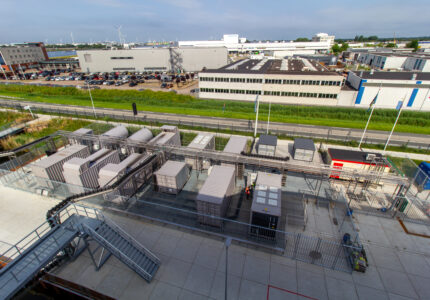
Battery containers for large scale energy storage
Battery containers provide scalable, infrastructure-grade energy storage for utility-scale projects. Designed for long-term performance, safety and predictable operation in renewable, industrial and grid-related applications.
-

REVO 3.0: new lithium battery modules for UPS systems
The technology in the world of emergency power supplies is developing rapidly, with the latest innovation in our range: the REVO 3.0 TPX600. An innovative modular battery…
-
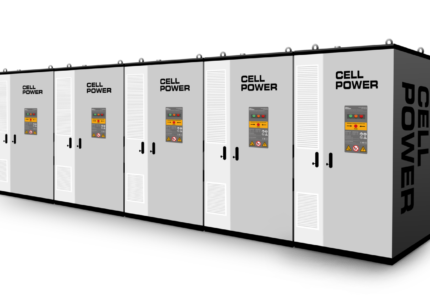
New energy storage systems with most powerful battery cells on the market
We are proud to introduce an entirely new series of Cellpower energy storage systems. These systems are designed for applications where space saving and energy efficiency are…
-

Battery storage for businesses
The power grid is becoming increasingly crowded, so how can you make sure you have a stable power supply?
Question or comment?
Do you have a question about this topic, or want to exchange thoughts about energy solutions?
Reach out, our specialists are happy to help.