


Battery chargers for lithium batteries
A lithium battery charger is specifically designed to charge lithium-ion and LiFePO4 batteries safely and efficiently. Selecting the right charger is essential for achieving maximum battery performance, charging speed and service life.
While some chargers may appear compatible, not every charger is suitable for every battery chemistry. Lithium batteries have different charging requirements than traditional lead-acid batteries and often rely on a specific charging profile to deliver optimal performance.
Whether you are replacing a lead-acid battery with lithium or selecting a charger for a new battery system, understanding the differences between charger types can help prevent charging issues and maximise battery lifespan.
Our lithium battery chargers
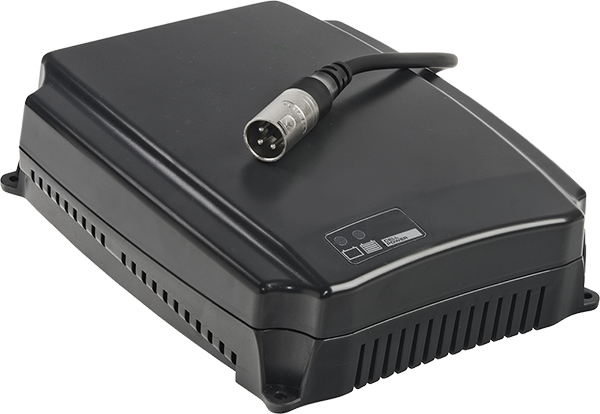
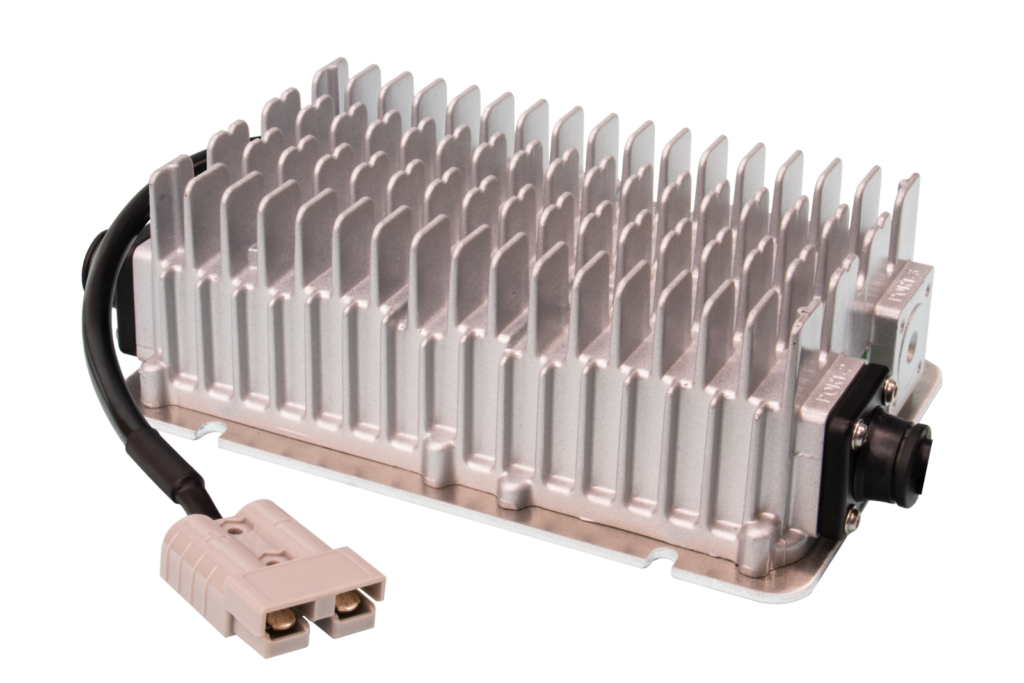
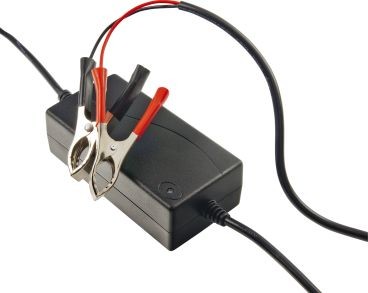
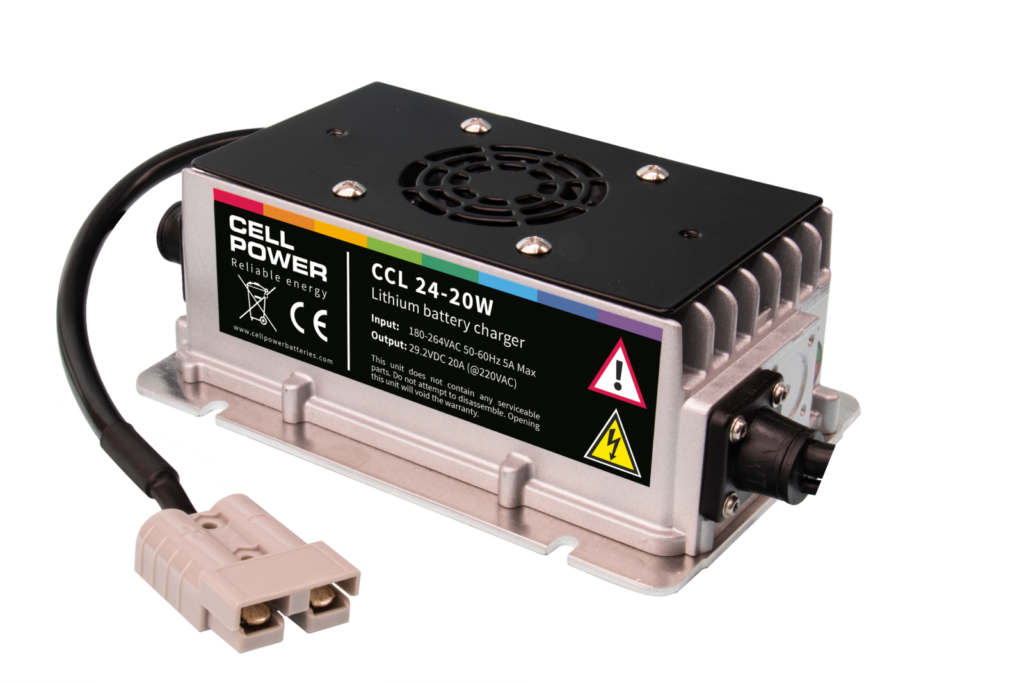
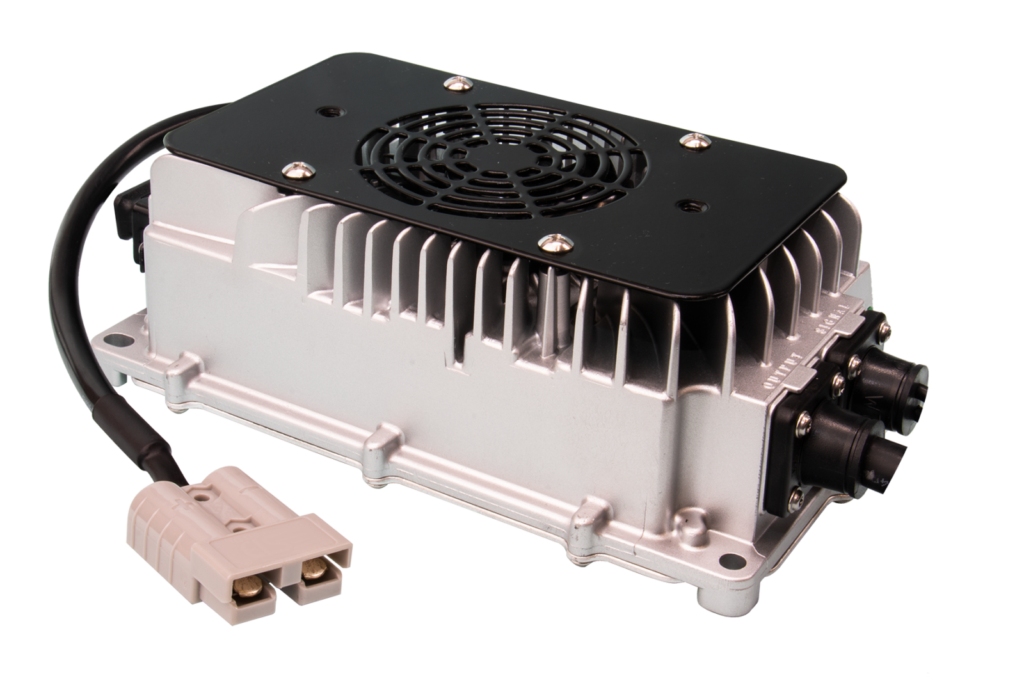
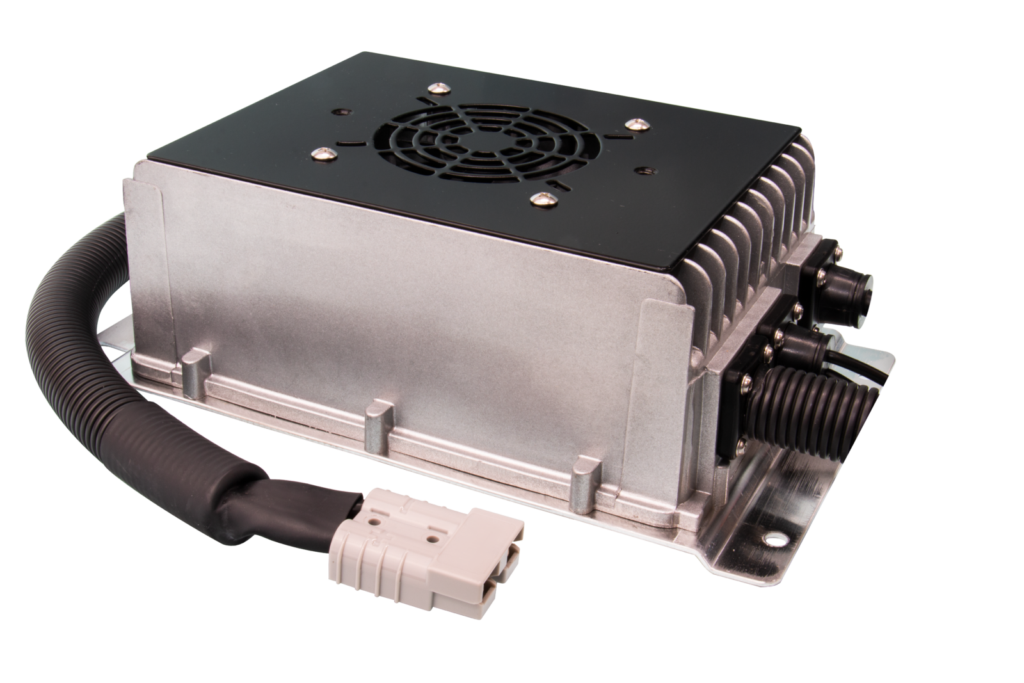
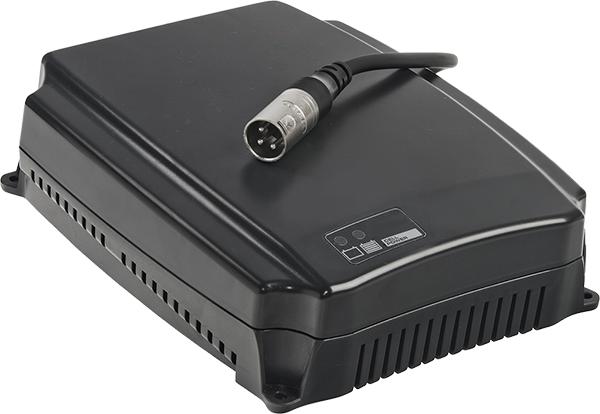
Looking for the right Lithium battery charger? Intercel offers a wide line of Lithium battery chargers for charging Lithium LiFePO4 batteries and Lithium battery packs. For charging 12V and 24V Lithium batteries, we supply Lithium battery chargers directly from stock!
What is a lithium battery charger?
A lithium battery charger is a charger designed to charge lithium-based batteries using the correct charging algorithm. Unlike chargers for lead-acid batteries, lithium chargers are configured to follow charging profiles that match the characteristics of lithium-ion and LiFePO4 cells.
Most lithium battery chargers use a Constant Current / Constant Voltage (CC/CV) charging method. During the first stage, the charger supplies a constant current to rapidly charge the battery. Once the battery reaches a predefined voltage, the charger switches to a constant voltage mode and gradually reduces the charging current until the battery is fully charged.
Using the correct charging profile helps maximise charging efficiency, protect the battery and ensure reliable operation throughout its service life.
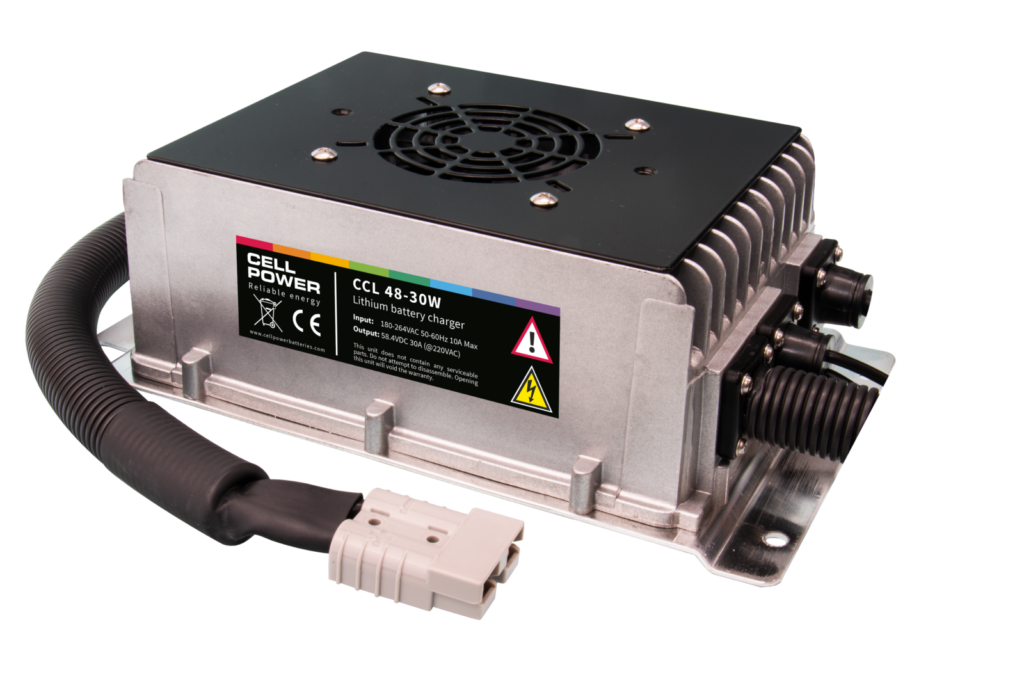
Can I charge a lithium battery with a normal charger?
Traditional lead-acid chargers are designed around charging characteristics that differ from those of lithium batteries. Many lead-acid chargers include charging stages such as bulk, absorption and float charging. While these stages are suitable for lead-acid batteries, they may not align with the charging requirements of lithium-ion or LiFePO4 batteries.
A dedicated lithium battery charger is generally the safest and most effective option. It applies the correct charging profile, reaches the appropriate charging voltage and avoids unnecessary charging stages that may reduce performance or charging efficiency.
When replacing a lead-acid battery with lithium, it is advisable to verify whether the existing charger is compatible with the new battery. Battery manufacturers typically specify the recommended charging voltage, charging current and charger requirements in their documentation.
For applications where reliability and battery life are critical, using a charger specifically designed for lithium batteries is strongly recommended.
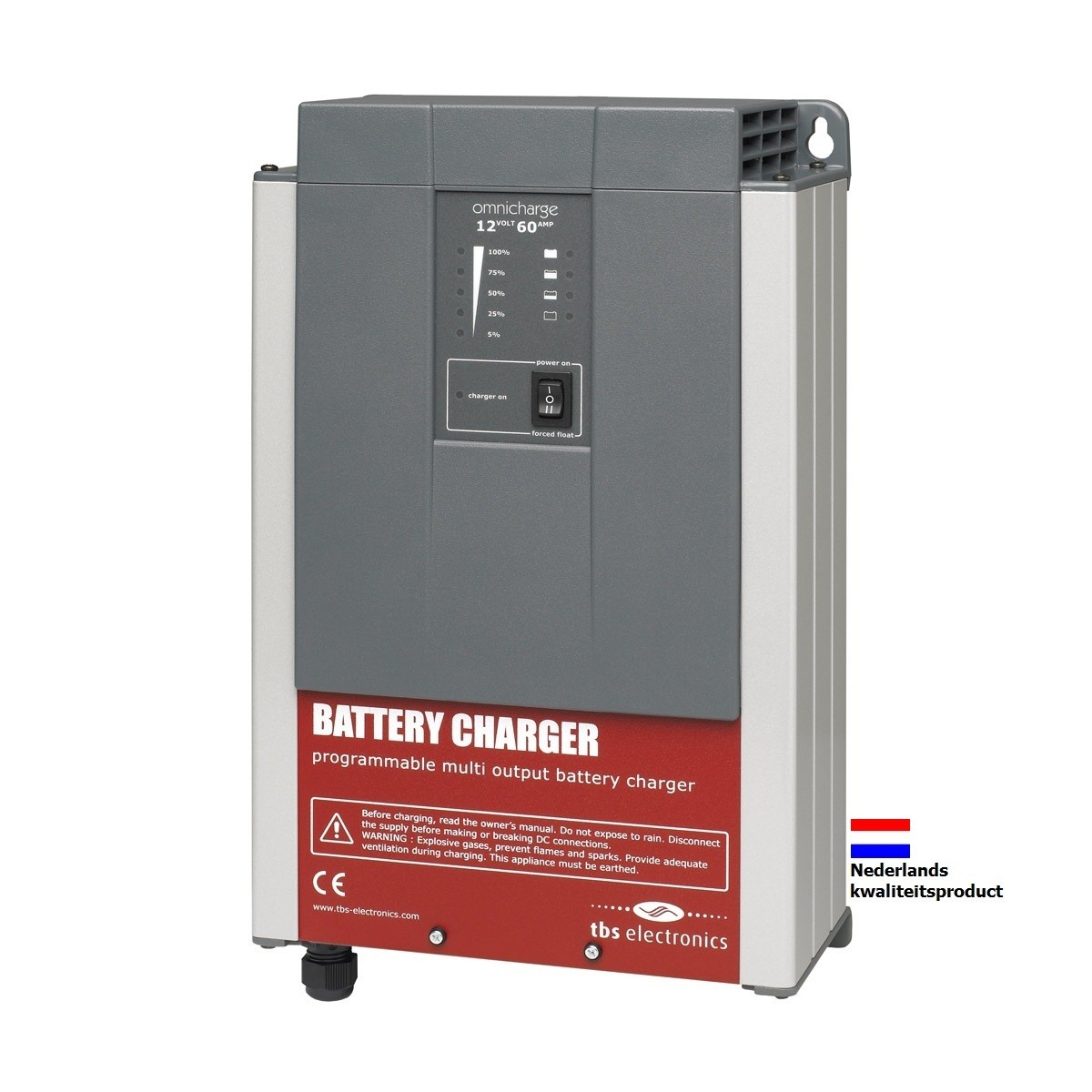
How to choose the right lithium battery charger
Selecting the right lithium battery charger is essential for achieving safe charging, maximum battery performance and a long service life. While many chargers may appear similar, factors such as battery voltage, capacity and chemistry all influence which charger is suitable for a particular application.
Match the battery voltage
The charger voltage must always match the battery voltage. A charger designed for a 12V battery cannot be used to charge a 24V battery, and vice versa.
Common lithium battery voltages include:
- 12V lithium batteries
- 24V lithium batteries
- 48V lithium batteries
When selecting a charger, always verify the battery’s nominal voltage and the recommended charging voltage specified by the battery manufacturer.
Select the correct charging current
Charging current determines how quickly a battery can be charged. A higher charging current generally results in shorter charging times, while a lower charging current may be preferable when charging speed is less important.
The optimal charging current depends on the battery capacity, which is typically expressed in ampere-hours (Ah).
Selecting an excessively large charger may not always provide benefits, while an undersized charger can result in unnecessarily long charging times.
Check battery chemistry
Not all lithium batteries use the same cell chemistry. The charger should always be compatible with the battery chemistry being used.
For example, LiFePO4 batteries typically require a different charging profile than other lithium-ion chemistries. Using the correct charging profile helps maximise battery performance and supports safe operation throughout the battery’s lifetime.
Always consult the battery specifications to verify charger compatibility.
Verify the manufacturer’s recommendations
The battery manufacturer’s documentation should always be considered the primary source when selecting a charger.
Specifications such as:
- Maximum charging voltage
- Recommended charging current
- Battery chemistry
- Charging temperature limits
can vary between battery types and manufacturers.
Following these recommendations helps ensure reliable charging performance and supports maximum battery lifespan.
How long does it take to charge a lithium battery?
The time required to charge a lithium battery depends on several factors, including battery capacity, charger output and the battery’s state of charge.
In general, a charger with a higher charging current will charge a battery faster than a charger with a lower charging current. However, the charging current should always remain within the limits specified by the battery manufacturer.
As a simplified guideline, charging time can be estimated using the following formula:
Charging Time (hours) ≈ Battery Capacity (Ah) ÷ Charger Current (A)
For example:
| Battery Capacity | Charger Current | Approximate Charging Time |
|---|---|---|
| 50 Ah | 10 A | 5 hours |
| 100 Ah | 20 A | 5 hours |
| 100 Ah | 50 A | 2 hours |
| 200 Ah | 50 A | 4 hours |
Actual charging times may vary depending on factors such as battery temperature, charging efficiency and the charging profile used.
One advantage of lithium batteries is their ability to accept relatively high charging currents compared to many lead-acid batteries. This often allows lithium batteries to be charged significantly faster, helping to reduce downtime and increase equipment availability.
For applications where fast charging is critical, it is important to select both a battery and charger that are designed to support higher charging currents.
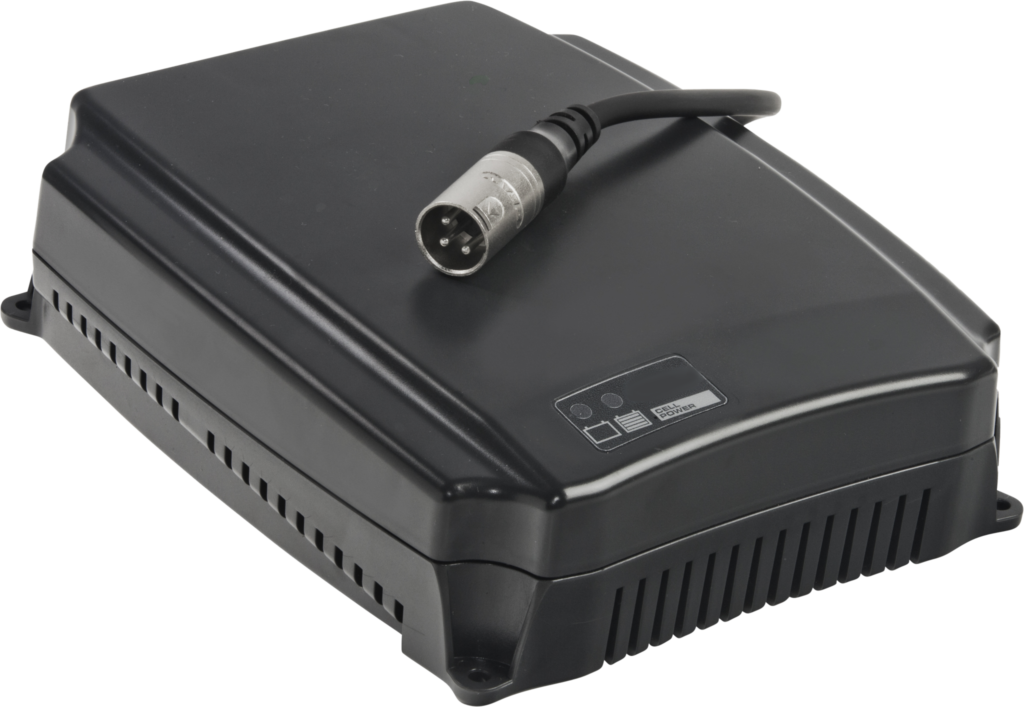
Need help selecting the right charger?
Not sure which charger is compatible with your battery system? Our battery specialists can help you select the best suitable charger based on battery chemistry, voltage, capacity and application requirements.
Lithium battery chargers for different applications
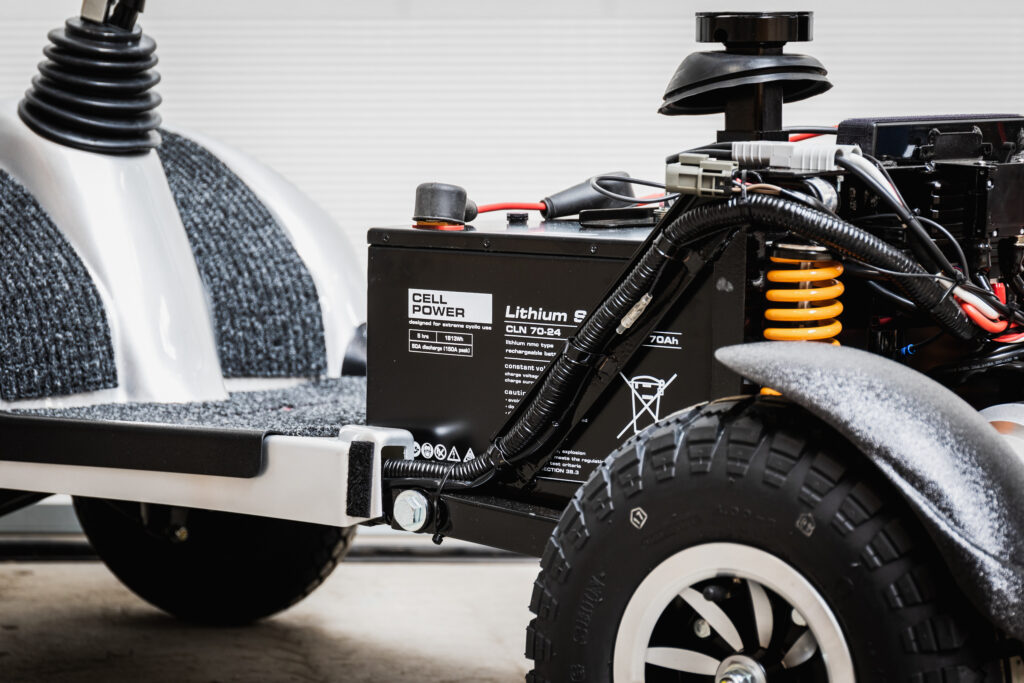
Mobility, Material Handling and Marine Applications
Lithium batteries used in mobility equipment, material handling vehicles and marine applications often require frequent charging and reliable day-to-day performance. Applications such as mobility scooters, forklifts, AGVs, floor cleaning machines and electric boats depend on battery systems that can be charged efficiently while maximising battery lifespan.
Selecting a charger that matches both the battery chemistry and application requirements helps ensure reliable operation, minimise downtime and maintain consistent battery performance throughout the day.

Backup Power and Standby Applications
In backup power and standby applications, battery reliability is critical. Batteries are often kept on charge for extended periods to ensure they are fully charged and ready to provide power when required. Typical applications include UPS systems, telecom infrastructure, emergency lighting and other critical backup power systems.
Selecting a charger with the correct charging profile helps maintain battery health and ensures reliable performance when backup power is needed most.
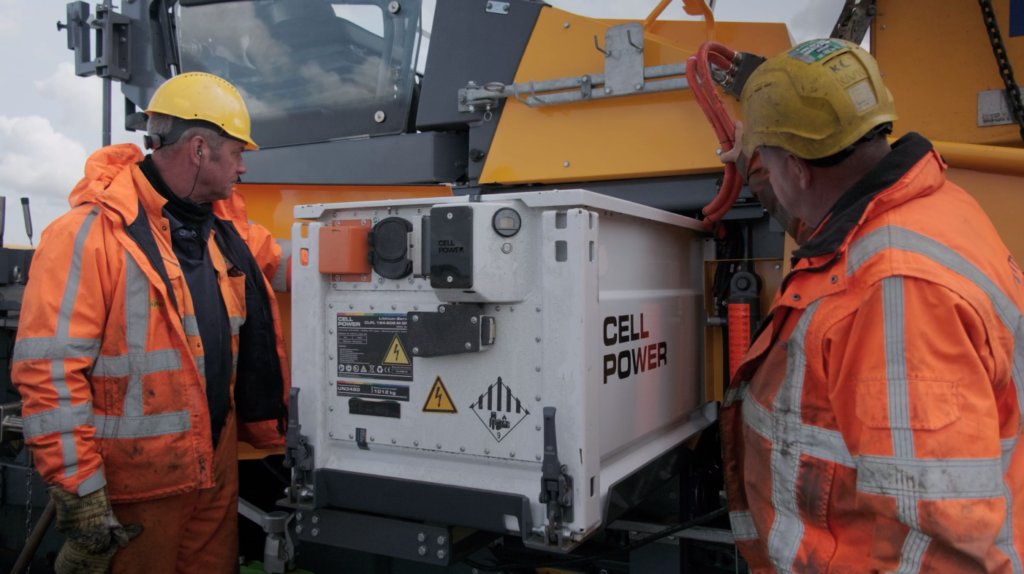
Industrial Vehicles and Electrification Projects
Electrification projects often involve custom battery systems for industrial vehicles, construction equipment, agricultural machinery and other heavy-duty off-highway applications. These applications typically place high demands on both the battery and charging system, requiring robust and reliable charging solutions.
When selecting a charger for electrification projects, factors such as battery capacity, charging time requirements, operating conditions and manufacturer recommendations should all be taken into account to ensure safe and efficient charging.
Common charging mistakes
Using the correct charger is important, but charging performance can also be affected by how the charger is used. The following mistakes are among the most common causes of charging issues and reduced battery performance.
❌ Using the wrong charger voltage
A charger must always match the battery voltage. Connecting a 24V charger to a 12V battery, or vice versa, can prevent proper charging and may damage the battery or charger.
Always verify the battery voltage and charger specifications before connecting the system.
❌ Using an incompatible charging profile
Lithium batteries require charging profiles that are designed for the battery chemistry being used. While some existing chargers may be compatible, using an unsuitable charging profile can result in incomplete charging or reduced performance.
When in doubt, consult the battery manufacturer or charger supplier to verify compatibility.
❌ Choosing a charger that is too small
An undersized charger may eventually charge the battery, but charging times can become impractically long. This can be particularly problematic in applications where equipment needs to return to service quickly.
The charger output should be selected based on battery capacity and operational requirements.
❌ Ignoring the manufacturer’s recommendations
Battery manufacturers specify recommended charging voltages, charging currents and operating conditions for a reason. Ignoring these recommendations can negatively affect battery performance, service life and warranty coverage.
Always follow the specifications provided for the battery and charger being used.
❌ Charging outside the recommended temperature range
Battery performance and charging behaviour are affected by temperature. Charging a battery outside its recommended temperature range can reduce charging efficiency and, depending on the battery type, may affect battery health.
Always follow the temperature limits specified by the battery manufacturer.
FAQ
Can I charge a lithium battery with a normal charger?
Whether a lithium battery can be charged with an existing charger depends on the charger specifications and the battery manufacturer’s recommendations. Some chargers may be compatible, while others may use charging profiles that are not suitable for lithium batteries. For optimal performance and battery life, a charger designed for the battery chemistry being used is generally recommended.
Need help deciding what charger is best for your battery? Our experts are happy to help.
How do you charge a lithium battery?
Lithium batteries are typically charged using a Constant Current / Constant Voltage (CC/CV) charging profile. During charging, the charger first delivers a constant current before switching to a constant voltage phase as the battery approaches full charge. Always follow the charging recommendations provided by the battery manufacturer.
How long does it take to charge a lithium battery?
Charging time depends on battery capacity, charger output and the battery’s state of charge. As a general guideline, charging time can be estimated by dividing the battery capacity (Ah) by the charger current (A). Actual charging times may vary depending on operating conditions and charging efficiency.
What charger is required for a LiFePO4 battery?
LiFePO4 batteries should be charged using a charger that supports the charging profile recommended by the battery manufacturer. Using a charger designed for LiFePO4 batteries helps ensure safe charging, optimal performance and maximum battery lifespan.
Need help deciding what charger is best for your battery? Our experts are happy to help.
Can a completely discharged lithium battery be charged?
In many cases, a discharged lithium battery can be recharged. However, if the battery voltage has dropped below the protection limits of the battery management system (BMS), special recovery procedures may be required. Always follow the battery manufacturer’s recommendations.
Is it better to use a dedicated lithium battery charger?
Yes. A dedicated lithium battery charger is designed to match the charging characteristics of lithium batteries and helps maximise charging efficiency, battery performance and service life. It also reduces the risk of charging issues caused by incompatible charging profiles.
Need help deciding what charger is best for your battery? Our experts are happy to help.
Lithium Battery Chargers from Intercel
Selecting the right charger is just as important as selecting the right battery. Charger compatibility affects charging performance, charging time and battery lifespan, making it essential to choose a charger that matches the battery chemistry, voltage and application requirements.
Intercel offers a range of lithium battery chargers for various battery technologies, voltages and applications. Whether you are charging batteries for mobility equipment, industrial vehicles, backup power systems or other professional applications, our specialists can help you identify a suitable charging solution.
As a specialist in advising on and supplying AGM, GEL, NiCd and lithium batteries, Intercel occupies a central position in the world of batteries.
We also supply battery packs, battery chargers, battery testers, power supplies, inverters and every imaginable battery accessory.
Intercel also offers the smartest products for rechargeable and non-rechargeable batteries and battery chargers.
Lithium battery chargers
THE RIGHT CHARGER GETS THE BEST OUT OF THE BATTERY
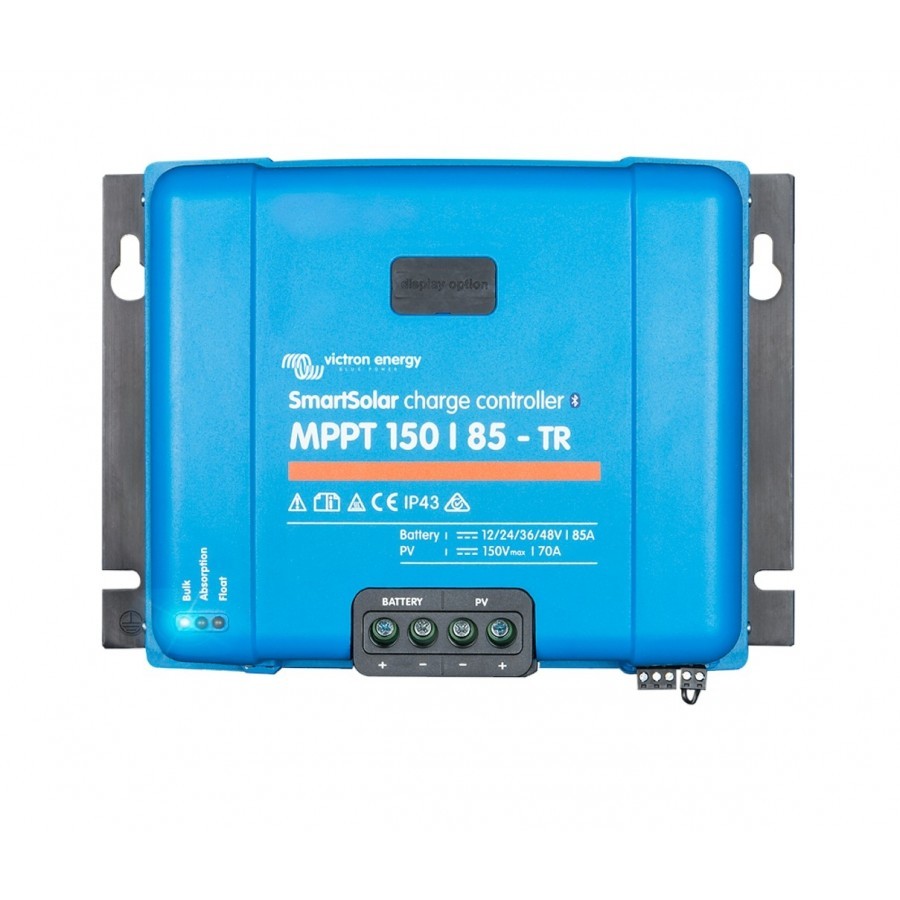
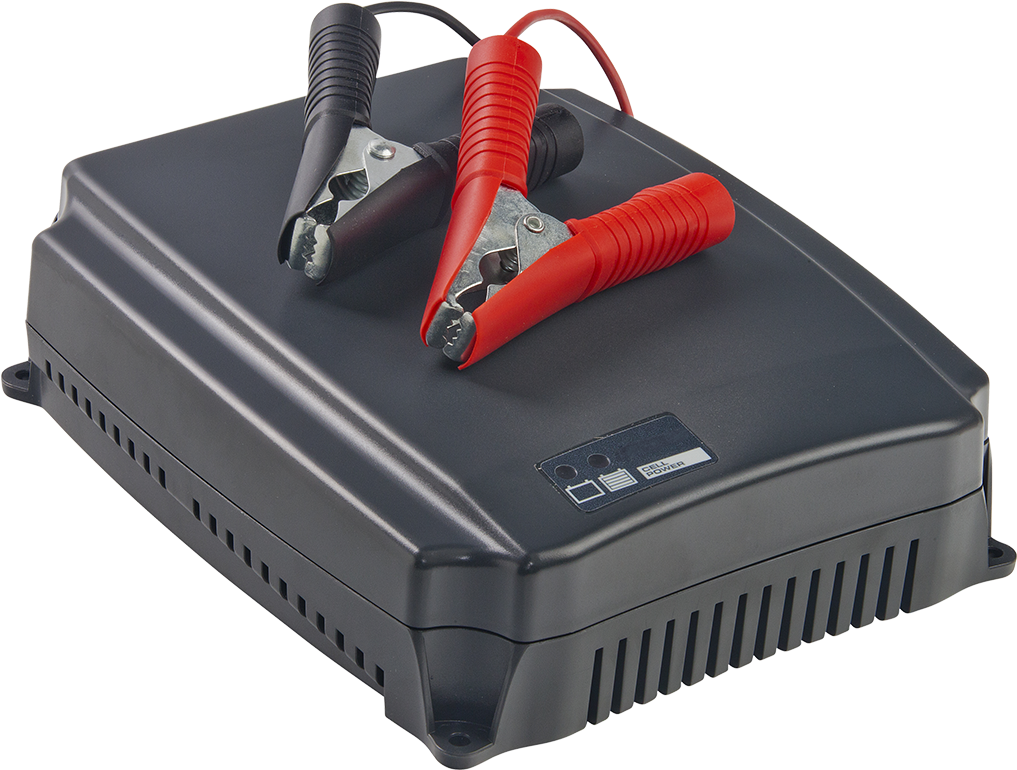
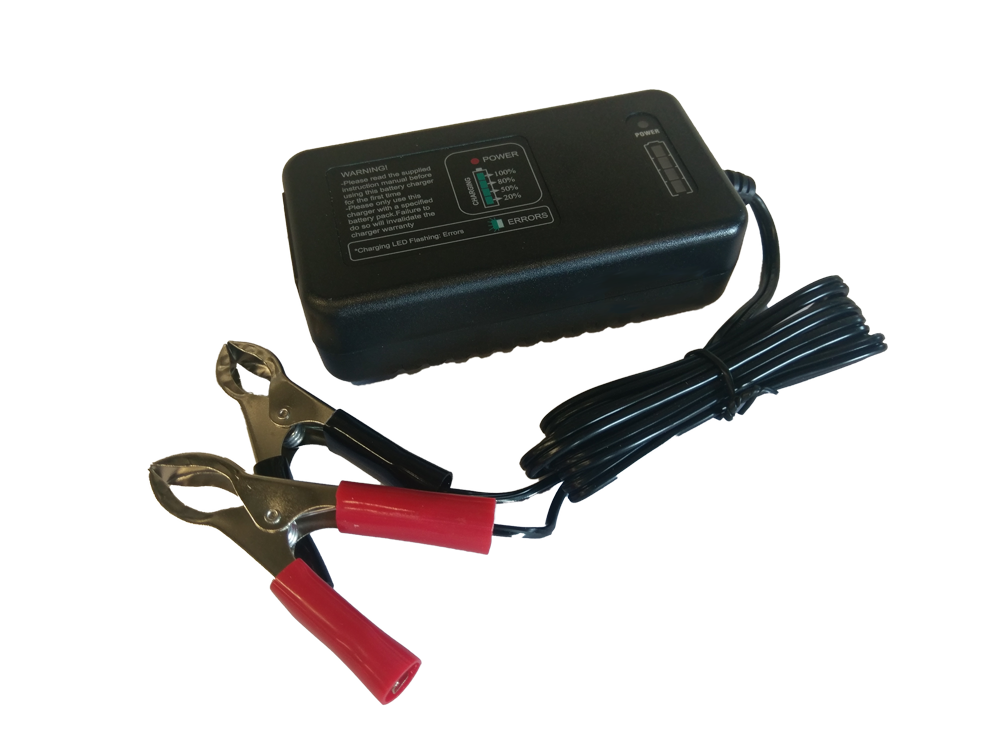
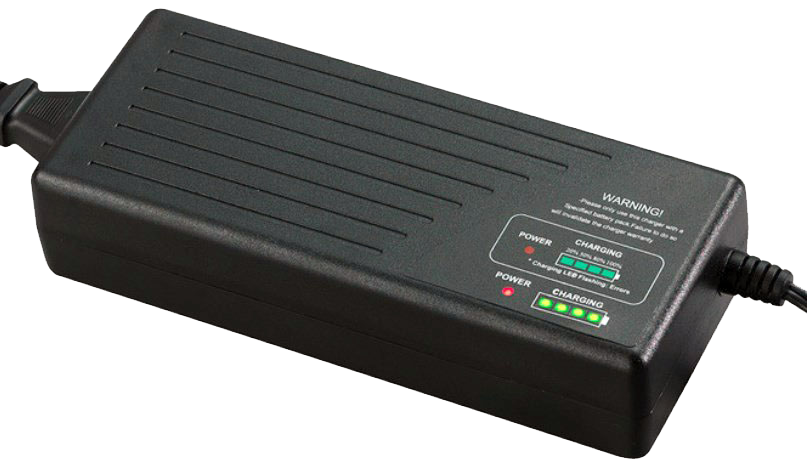
Intercel offers 6V, 12V, 24V, 36V and 48V battery chargers and different charging currents, from 0.5A to 50A. From Cellpower, pbq, AdelSystems, Victron, TBS and more. There are various types of housing for battery chargers, such as plug chargers, table chargers and battery chargers with waterproof housings. Battery chargers for a battery pack are also in the range, as well as a trickle charger.
-
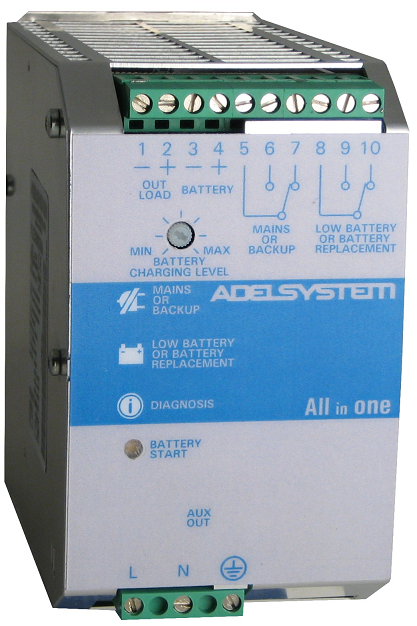
AdelSystems AS CBI 126A-NI
More info: AdelSystems AS CBI 126A-NI- 65 x 115 x 135 mm
- 6 A
- AGM
- Gel
- Lithium
- NiCD
- 12 V
-
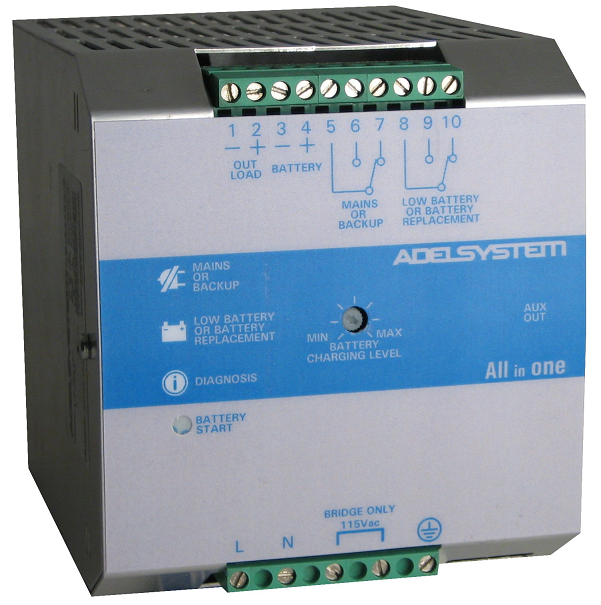
AdelSystems AS CBI 2410AS-N
More info: AdelSystems AS CBI 2410AS-N- 100 x 115 x 135 mm
- 10 A
- AGM
- Gel
- Lithium
- NiCD
- 24 V
-
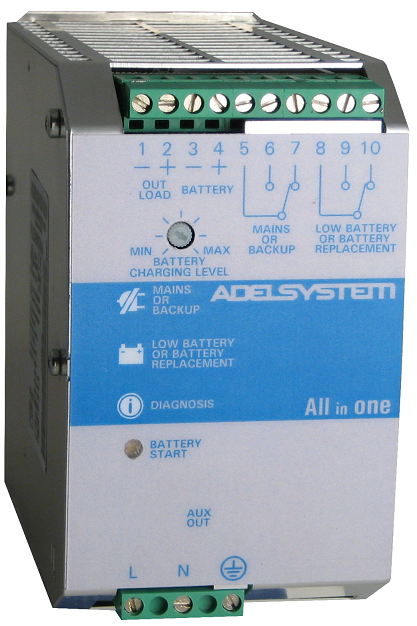
AdelSystems AS CBI 243 A
More info: AdelSystems AS CBI 243 A- 65 x 115 x 135 mm
- 3 A
- AGM
- Gel
- Lithium
- NiCD
- 24 V
Customer stories
-
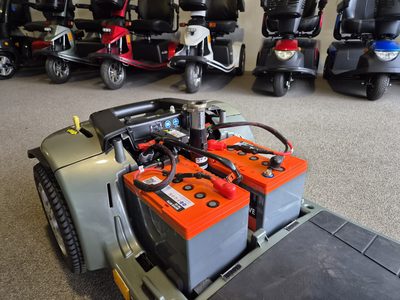
Achterhoek-Comfort – Mobility scooters with GEL batteries
We have been delighted to work with Intercel (formerly Wetac) for many years. Both before and after the merger, we have been very satisfied with the products…
-

Skyjack – Batteries for Aerial Working Platforms
Intercel offered us excellent options both from technical and commercial point of view. We could choose the best solutions for our applications from their wide range of…
-
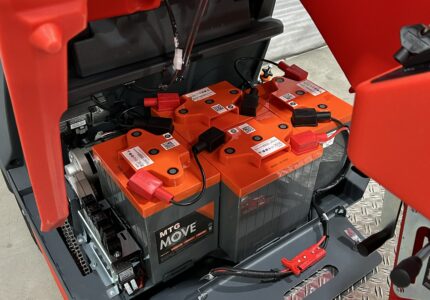
Stolzenberg GmbH – Batteries for Ride-on Sweeper
Our collaboration with Intercel has been very positive throughout. Their solution-oriented approach and professional communication are excellent. Even when
Need help selecting the right charger?
Not sure which charger is compatible with your battery system? Our battery specialists can help you select the best suitable charger based on battery chemistry, voltage, capacity and application requirements.
Explore all battery technologies
Discover the different battery technologies and where each truly powers ahead.